Muse, Instinct, and Dots as personal shopping agents
Jess Wang·11 min
Key takeaways
Dots had better product choices
Across 25 live-web shopping requests, one blinded reviewer ranked Dots ahead of Instinct and Muse for how well the products matched the request.
Instinct had better written answers
In the same review, Instinct ranked ahead of Dots and Muse for the quality of its responses to shoppers.
Muse searched more and recommended fewer products
In the fixed WebShop catalog, Muse searched the most and gave no product recommendation for six of 25 requests. Instinct and Dots each gave no recommendation for one.
Dots left more room in the budget
On the live web, Dots was a median of $5.71 below budget, compared with $3.01 for Instinct and $2.00 for Muse. Requests with no product counted as $0 below budget.
AI agents are offering to run our lives. We've all seen those Instagram ads telling us to use Meta's Muse to analyze our workouts, review our bills, book our next vacation, and even manage our calendars and inboxes. Similarly, Instinct is marketed as a personal AI assistant, and OpenAI's Dots is a ChatGPT-based assistant.
When we ask "which AI assistant performs the best?", it's tricky to judge because these products are highly simplified and completely black boxes. Unlike using Codex or Claude Code to build our own agents, we have no control over the model, tool policy, search behavior, memory, or product UX.
To compare the three products, we decided to see which one was the best at personal shopping. Shopping is a good way to test several parts of an assistant at once: whether it follows constraints, selects useful sources, makes a clear decision, and explains that decision well.
In this eval, we compared 25 identical personal-shopping requests across Muse, Instinct, and Dots. Each assistant received every request twice: once using a fixed WebShop catalog and once on the open web.
This is a deliberately narrow test of one shopping interaction, not a test of personalized context such as email, cards, purchase history, or long-term memory.[1]
We used a 25-row dataset of LLM-generated shopping scenarios. The requests included preferences around budget, product type, ingredients, ratings, review counts, and aesthetics. Examples include:
“I want to buy a shampoo or conditioner for damaged hair. It must be sulfate-free, paraben-free, contain hyaluronic acid and coconut oil, and support hair growth and hair-loss care. Keep it at or below $40.”
“I want black or very dark pants that make my butt look good but are still comfortable enough to sit in all day. No leggings. I want them to look intentional rather than like gym clothes, and I would rather stay under $70.”
“I need an adjustable phone stand for my desk. Only recommend it if it is rated at least 4.9 stars with 50,000 or more reviews and costs $10 or less. If nothing meets every requirement, tell me that rather than recommending the closest option.”
“I need a small white-elephant gift that feels genuinely funny or delightfully over-the-top, not generic gag-store junk. Bright orange, purple, cartoon prints, or a strange pattern would be great. Keep it under $20.”
This dataset was used across two approaches in our personal shopping eval:
The first approach was built around WebShop, which is a controlled retail environment with a fixed catalog. For each request, we gave the assistant the shopper prompt and a link to a WebShop sandbox. Braintrust logged its searches and product-page opens, letting us compare research behavior in a fixed catalog where price, inventory, and ranking did not change. WebShop is not a substitute for live-web shopping, but it gives us a clean baseline for comparing the assistants across more volatile open-web conditions.
In the second approach, we allowed the assistants to search the live internet instead of restricting them to the WebShop catalog. Since we were not able to trace the browser actions with this approach, we evaluated only the outcome instead: how good were the product recommendation and written response?
For WebShop, the harness created a Braintrust root trace and gave the assistant a unique store link. Every landing-page visit, search, returned result set, and product-page open was logged by WebShop, and we added them as child spans in Braintrust.[2] For open-web runs, we recorded the prompt, visible final response, and product link to Braintrust, but we could not record browsing actions on third-party sites like Walmart or Amazon.
For both approaches, we used two types of scorers:
Deterministic "requirements-fulfilled" score: For each prompt, we used an LLM to translate its requirements into structured predicates. We evaluated the final product on whether it satisfied each predicate. The shampoo and conditioner prompt above had nine true/false checks: product type contains either shampoo or conditioner, price is at or below $40, sulfate-free, paraben-free, hyaluronic acid, coconut oil, damaged hair, hair growth, and hair loss. A product that matched all nine would receive 1.00, and matching eight out of nine would receive 0.89.
Human review: One reviewer assessed all results in a blinded A/B/C triad, with each assistant hidden and randomized as one of the candidates. The reviewer separately ranked each candidate's product recommendation and written response, and ties were allowed. We unblinded the assistant identities only after all review decisions were complete.
WebShop lets us compare deterministic requirements fulfillment, blinded human product fit, and the logged browsing behavior for Muse, Instinct, and Dots:
Outcomes
WebShop outcomes
Deterministic "requirements fulfilled"
Share of predicates met across the product recommendations.
Muse
94.2%17/23 scored
Instinct
91.7%22/23 scored
Dots
88.3%22/23 scored
0%20%40%60%80%100%
Human product-fit review
Mean rank across 25 blinded reviews. Lower is better. Ties were allowed.
Muse
1.28
Instinct
1.04
Dots
1.00
123
Mean rank, where 1 is best
There are instances where an assistant did not return a product recommendation because it could not find anything that fit the requirements, so the deterministic scorer did not run on those results. Muse had six such cases, compared with one each for Dots and Instinct. Two patterns explain all five cases where Muse disagreed with Instinct and Dots about whether the WebShop catalog supported a reasonable recommendation; the table highlights one example of each.
Case
Visible-final-answer reason
Instinct / Dots deterministic score
Human-review note
ws_011
Muse declined to recommend a final pair of pants after describing close-but-imperfect options.
1.00 / 0.75
The reviewer found both alternatives imperfect: Dots' chinos were not butt-flattering, and Instinct's option was not dark as requested.
ws_023
Muse did not make a unique final bag-or-accessory recommendation.
1.00 / 1.00
The reviewer found both Instinct and Dots to match the request well, while Muse did not identify a usable final product.
In three of the five cases, Muse declined to recommend a product because it did not find an exact match, while Instinct and Dots proposed the closest available option. In the other two, both assistants returned a product that met the objective requirements and that Muse did not select.
This makes the split between our deterministic score and human review score easier to interpret. Muse’s deterministic score includes only traces with a resolvable final product, while the human review treats a no-recommendation outcome as worse than a helpful near-match.
WebShop traces
WebShop browsing behavior
Mean logged events per task. These describe the observed research path and do not establish causation.
Assistant
Search actions
Product opens
Session events
Muse
14.88
3.16
19.88
Instinct
11.32
5.08
19.16
Dots
3.56
2.28
9.32
Muse made the most searches of the three assistants, while Dots followed a shorter observed path with the fewest search and product-open events.
When looking at the traces, we saw a pattern. Muse was not failing to discover the candidates that Instinct and Dots found as well, but it was searching more broadly, opening fewer candidate product pages, and declining to commit to a product. The results seem to support the claim that extra searching does not reliably translate into product verification or a more decisive final recommendation.
The controlled WebShop environment records each search and product-page visit, so we can inspect browsing behavior. On the open web, the assistants browse external sites that do not have built-in logging, so we cannot see the browser actions themselves. For the open-web runs, we evaluate final-answer evidence and use human review rather than analyzing search paths.
Outcomes
Open-web outcomes
Deterministic "requirements fulfilled"
Share of predicates met across the product recommendations.
Muse
94.7%
Instinct
88.3%
Dots
82.1%
0%20%40%60%80%100%
Human product-fit review
Mean rank across 25 blinded reviews. Lower is better. Ties were allowed.
Muse
1.52
Instinct
1.40
Dots
1.28
123
Mean rank, where 1 is best
Muse had the highest stated-fact coverage score in the open-web audit. That score measures how completely the final response documented the objective requirements, not whether a live product page independently satisfied them. However, it is important to note that quite a few of these rows were not graded by the deterministic scorer. For Muse and Dots, five rows did not return a product because the assistant could not find anything that fulfilled the ask. For Instinct, it was six rows. Furthermore, the scorer only graded the information that was included in the final response, which sometimes did not contain every parameter (such as product type, price cap, required attributes, rating, review count, etc.). The number of ungraded responses is likely a reflection of the completeness of the assistant's response. This differs from WebShop, where every product belongs to a fixed sandbox catalog, and the scorer can map the final recommendation to that catalog record. On the open web, live retailer pages can change price, stock, and product copy, so the scorer deliberately uses the saved answer instead of refetching the pages.
The human review adds context that the limited-coverage deterministic audit cannot provide on its own. Using the same product-quality ranking as our WebShop human review, Dots ranked best, followed by Instinct and Muse. We broke the human review scores down by response quality and product quality:
Human review
Open-web human review
Mean rank across 25 blinded triads. Lower is better. Ties were allowed.
Response quality
Mean rank across 25 blinded reviews. Lower is better. Ties were allowed.
Muse
2.24
Instinct
1.44
Dots
2.04
123
Mean rank, where 1 is best
Product quality
Mean rank across 25 blinded reviews. Lower is better. Ties were allowed.
Muse
1.52
Instinct
1.40
Dots
1.28
123
Mean rank, where 1 is best
A lower mean rank is better. Instinct wins response quality and Dots wins product quality. To add more color to these results, we decided to analyze the comments for each of these human reviews and group the comments by theme:
Human-review notes
Product feedback by theme
Comment volume by assistant and product theme. Hover a bar for the aggregate reading.
mostly negative mixed or neutral mostly positive
9630
MID
Price or total cost
MID
Availability or purchasable variant
MID
Retailer trust or review evidence
MID
Visual or aesthetic fit
MID
Constraint or intent fit
Assistant-specific comment mentions
Hover or focus a barto see the assistant-specific aggregate reading.
Within each theme, bars are Muse (M), Instinct (I), then Dots (D). Color shows whether the reviewer’s comments in that theme were mostly negative, mixed, or mostly positive; it is not another numeric score.
Human-review notes
Response feedback by theme
Comment volume by assistant and response theme. Hover a bar for the aggregate reading.
mostly negative mixed or neutral mostly positive
6420
MID
Specificity or decision support
MID
Direct link or purchase path
MID
Candor or research transparency
Assistant-specific comment mentions
Hover or focus a barto see the assistant-specific aggregate reading.
Within each theme, bars are Muse (M), Instinct (I), then Dots (D). Color shows whether the reviewer’s comments in that theme were mostly negative, mixed, or mostly positive; it is not another numeric score.
Since all of our prompts included a target budget, we wanted to see whether there was a pattern in how close each assistant got to the target budget. For each row, we calculated headroom as the budget minus the final product price, then compared the median headroom for each assistant. Here are the results:
Assistant
Price coverage
Median signed headroom
Median 0–1 headroom score
Over-cap / scored
No final product → $0 difference
Muse
25/25
$2.00
10%
0/25
5
Instinct
25/25
$3.01
14%
0/25
6
Dots
25/25
$5.71
20%
0/25
5
No product recommendation went over the target budget. Muse recommended products closer to the target budget, whereas Dots recommended products further below budget.
We also wanted to inspect whether there was any pattern of overlap between the responses of the three AI assistants. When two assistants independently recommend the same product, it's evidence that the product was probably the most salient solution in the available choice set, especially when it comes to an open-web search. Of course, agreement does not always mean "right," since the assistants could share popular-but-bad results. It is also interesting to observe whether certain assistants tend to converge with each other more, because it can give us a behavioral fingerprint of the harnesses even though we cannot inspect what is happening internally.
Recommendation overlap
Assistant-pair agreement fingerprints
Counts are out of 25 matched requests. Blue cells indicate documented product-level overlap. The gray column captures no established product or storefront relationship.
Product-level overlapNo overlap or unresolved
WebShop
Pair
Exact product
Family / variant
Same storefront, other item
No overlap / unresolved
Muse / Instinct
8
0
5
12
Muse / Dots
4
0
6
15
Instinct / Dots
8
0
7
10
Open web
Pair
Exact product
Family / variant
Same storefront, other item
No overlap / unresolved
Muse / Instinct
2
1
1
21
Muse / Dots
2
2
2
19
Instinct / Dots
3
1
0
21
For WebShop, Instinct matched with Muse on eight products and Dots on eight, while Muse and Dots matched only on four, all of which were three-way-consensus cases. This does not prove that Instinct is more correct, but it does show that its final choices were closer to the shared catalog consensus. The open-web overlap is less cleanly clustered than WebShop. There is no obvious pattern of agreement, meaning that the assistants took genuinely different paths in their shopping choices.
Interactive exercise
Review it yourself
Rank the results. 1 is best, 3 is worst, and ties are allowed.
Shopper request
I want to buy a shampoo or conditioner for damaged hair. It must be sulfate-free, paraben-free, contain hyaluronic acid and coconut oil, and support hair growth and hair-loss care. Keep it at or below $40.
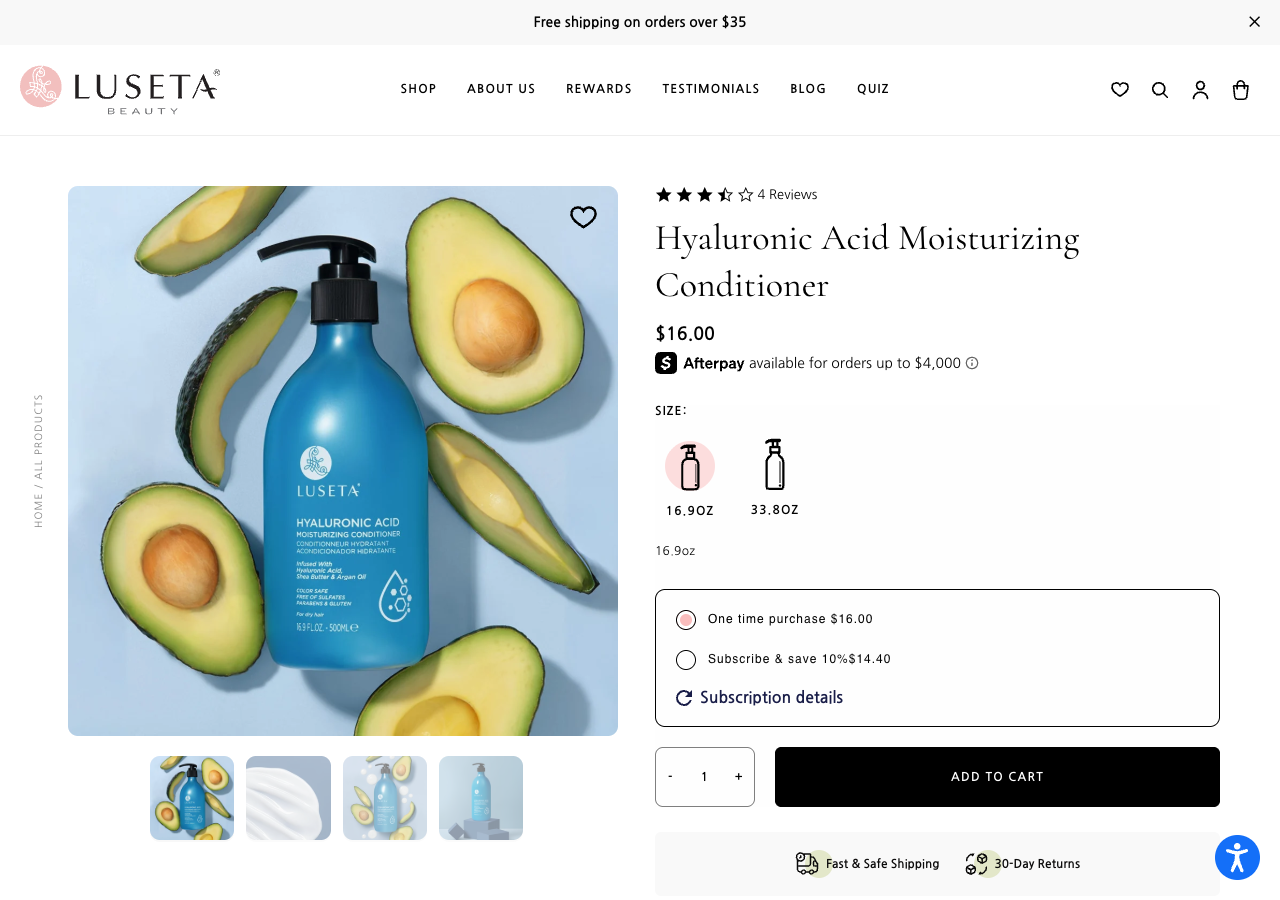
Hyaluronic Acid Moisturizing Conditioner (Luseta Beauty), 16.9 oz — $16. Brand says sulfate-free and paraben-free, and the ingredient list includes hyaluronic acid and coconut oil. It targets dryness, brittleness, and detangling.
Caveat: its growth and hair-loss claims are marketing, not clinical proof. I’d pick it for damage and breakage care, not as a proven treatment for shedding. It contains fragrance and silicones; price is before shipping and tax.
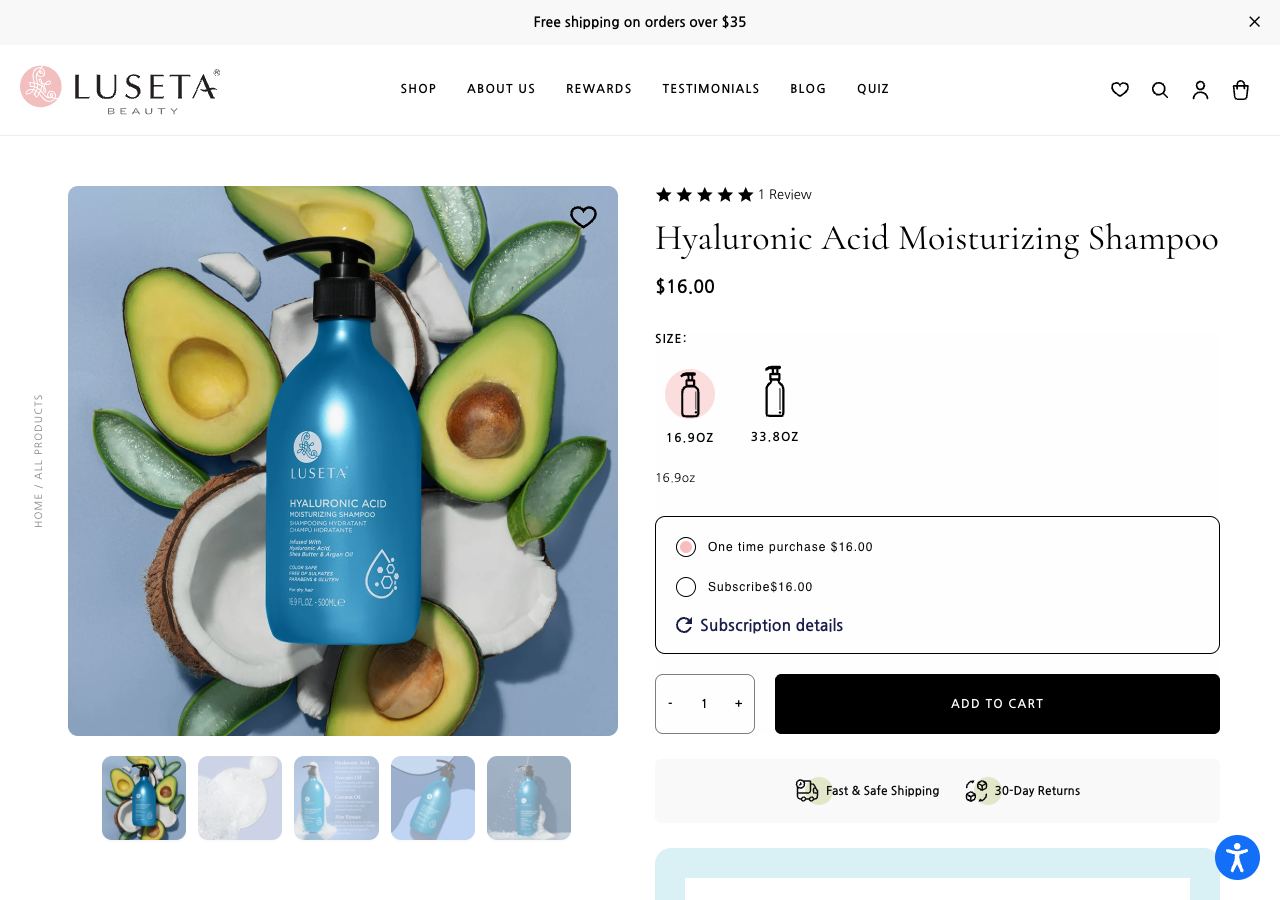
Hyaluronic Acid Moisturizing Shampoo at $16.00 — sulfate-free and paraben-free, with hyaluronic acid and coconut oil, positioned for dryness and brittleness with hair-growth claims, well under $40.
One caveat: those hair-growth benefits are the brand’s claims, not clinically proven. Topical hyaluronic acid and coconut oil are not established hair-regrowth treatments.
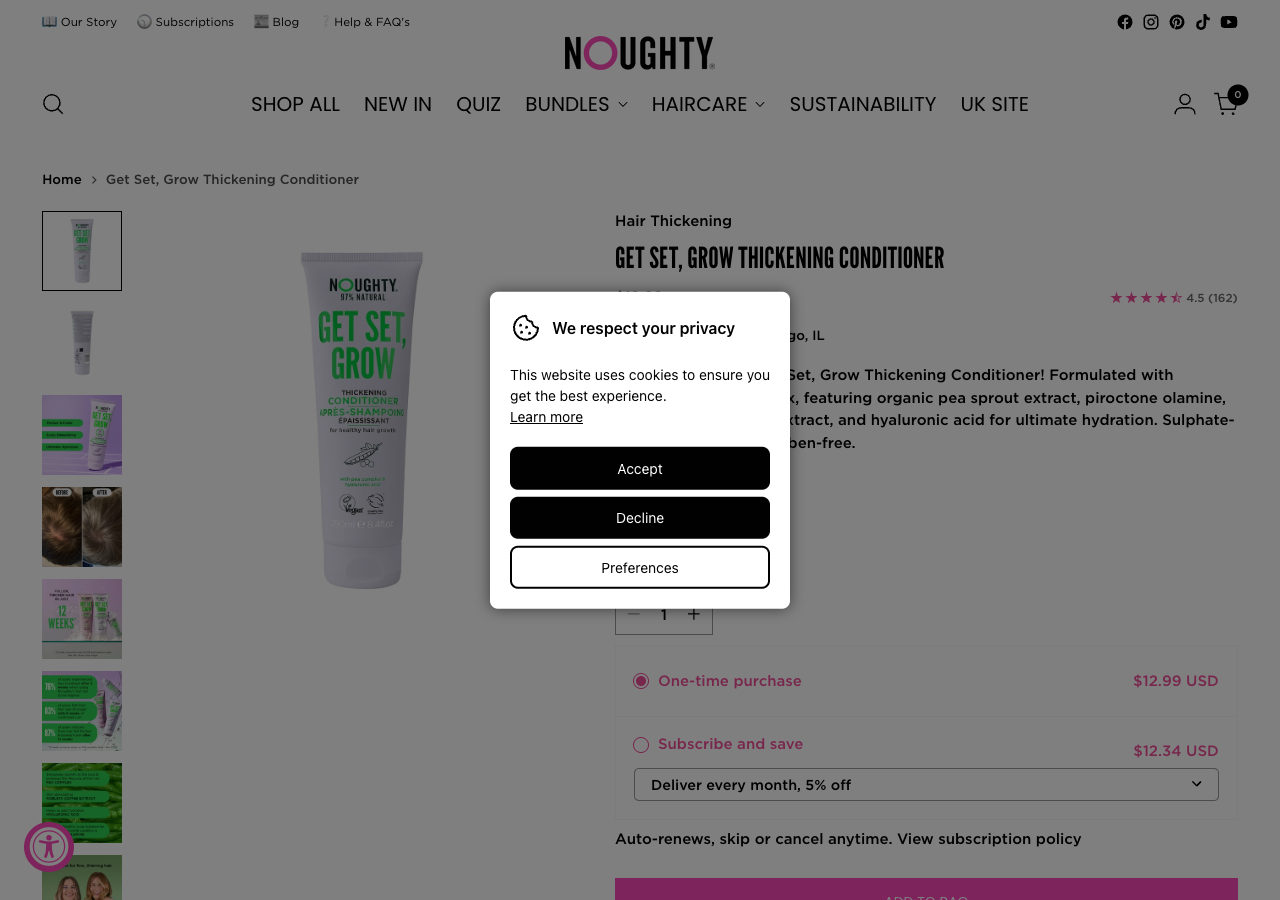
Noughty Get Set, Grow Thickening Conditioner — $12.99 for 8.4 fl oz. It’s sulfate-free and paraben-free, and its ingredient list includes coconut oil and sodium hyaluronate. It moisturizes fragile strands and is marketed for scalp health and growth support.
It supports hair care but isn’t a proven treatment for regrowing lost hair. Price excludes shipping and tax.
Which written response is best?
Candidate A
Candidate B
Candidate C
Which product is best?
Candidate A
Candidate B
Candidate C
Within this 25-case personal-shopping study, Instinct was the strongest all-around default. It had the best open-web response quality, the second-best WebShop human product-fit result, and the most WebShop overlap with another assistant. Its price behavior also sat between Muse's tendency to spend close to the limit and Dots' tendency to find much cheaper options. This is not necessarily better, but it is a sign of a more balanced shopping strategy.
That being said, the results are more useful as a map of tradeoffs than as a universal leaderboard. Dots may be a better option for somebody who wants strong product choices at a lower price, and Muse may be better for a very cautious shopper who makes broader searches and follows guidelines strictly.
You can build an eval like this to compare how your own agents make decisions, follow constraints, and communicate recommendations. Sign up for free to run an eval, or book a demo to talk through your evaluation plan.
1.This eval tests a single shopping interaction. It does not evaluate access to email, cards, purchase history, or long-term memory, so it cannot determine which assistant would be best for an individual shopper.
2.In the WebShop traces, a search action records the assistant searching a phrase or keyword from the shopfront landing page. A product open records it opening a returned product link to inspect the details.
Share
Read more evals
Resend vs Postmark MCP for transactional email
1 October 2026
GPT-6.1 Sol vs GPT-6 Sol for problem solving and teaching
30 September 2026
Opus 5.5 vs new GPT-6 models for writing quality
22 September 2026
Subscribe to the Department of Evals
A newsletter for unfiltered thoughts on eval methodology, analysis, and failures

Human-review notes
Product feedback by theme
Comment volume by assistant and product theme. Hover a bar for the aggregate reading.
Price or total cost
Availability or purchasable variant
Retailer trust or review evidence
Visual or aesthetic fit
Constraint or intent fit
Assistant-specific comment mentions
Hover or focus a barto see the assistant-specific aggregate reading.
Within each theme, bars are Muse (M), Instinct (I), then Dots (D). Color shows whether the reviewer’s comments in that theme were mostly negative, mixed, or mostly positive; it is not another numeric score.