

AI agents lose context when conversation history falls outside the context window or a session ends. Without persistent memory, they repeat questions, miss updated facts, and rebuild user or project context each time.
An AI agent memory tool extracts relevant facts from interactions, stores them beyond the live context, updates or expires them when information changes, and retrieves the most useful memories for later turns. Tools differ in how they structure memory, including semantic recall, knowledge graphs, temporal validity, and agent-managed memory, as well as whether they run as managed services or self-hosted systems.
This guide compares six memory tools by design, deployment, and use case, then explains how to verify whether memory improves agent behavior. Braintrust helps teams trace memory-backed agents and evaluate task success, retrieval quality, errors, and latency, so they can identify which approach yields more accurate responses, better continuity, and fewer repeated questions for users.
What an AI agent memory tool does
Large language models can only use information inside the active context window. When a session ends, or older messages are removed from context, the agent can no longer access previously stated preferences, project details, decisions, or status changes.
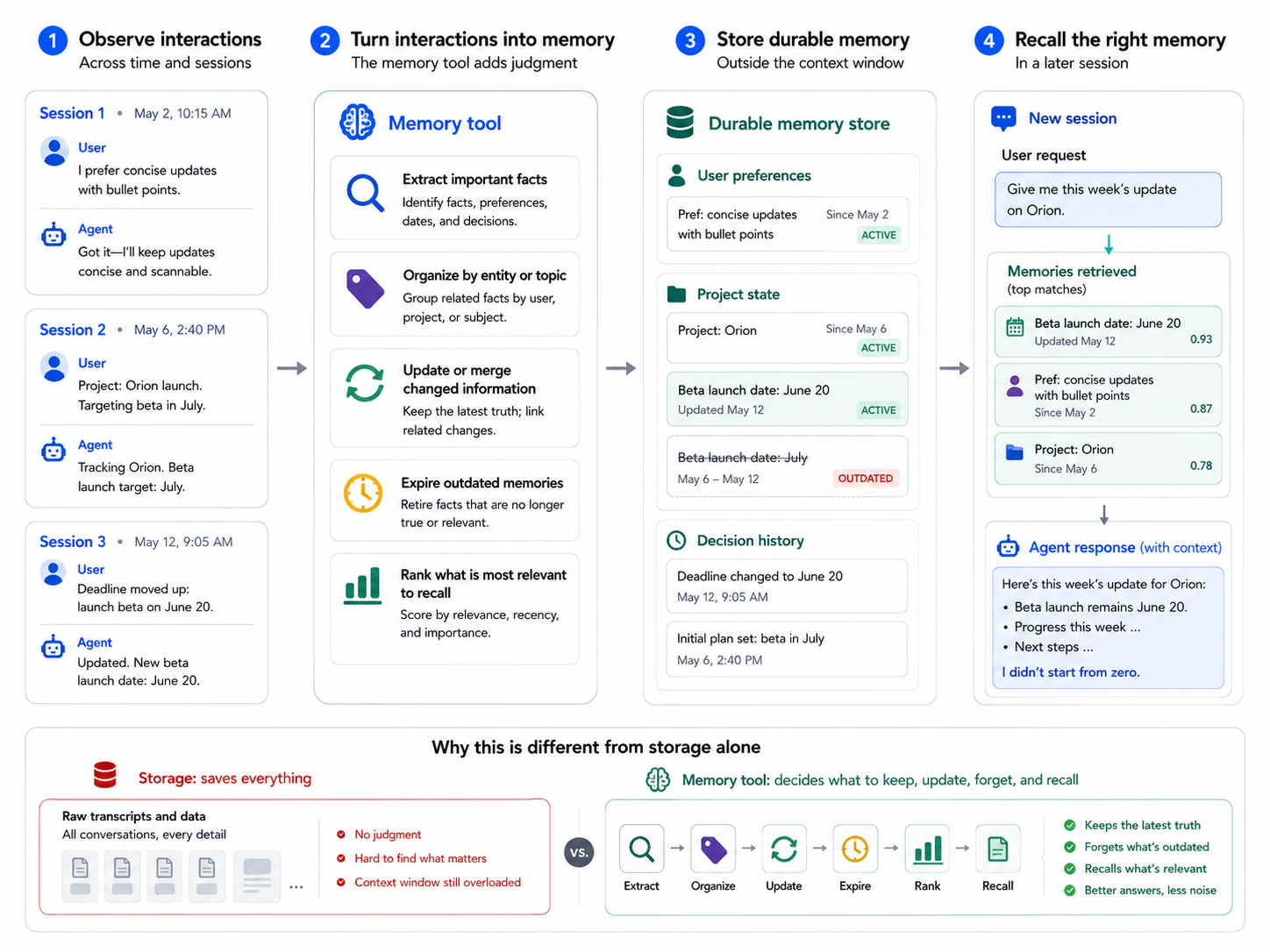
An AI agent memory tool gives the agent persistent recall across turns and sessions. The tool extracts facts from conversations, stores them in a separate memory layer, and retrieves selected facts when a new request depends on earlier context. For example, the agent can remember a user's preferred response format, the current project deadline, or a decision made in a previous session.
A vector database can store embeddings and return records with similar meaning, but similarity search alone does not manage memory. A memory tool decides which facts should become memories, links related facts, replaces outdated information, preserves historical changes when needed, and ranks memories before adding them to the agent's context. Some tools use semantic retrieval, while others use knowledge graphs, temporal records, or agent-controlled memory.
6 AI agent memory tools to know in 2026
1. Mem0: a general-purpose semantic memory layer
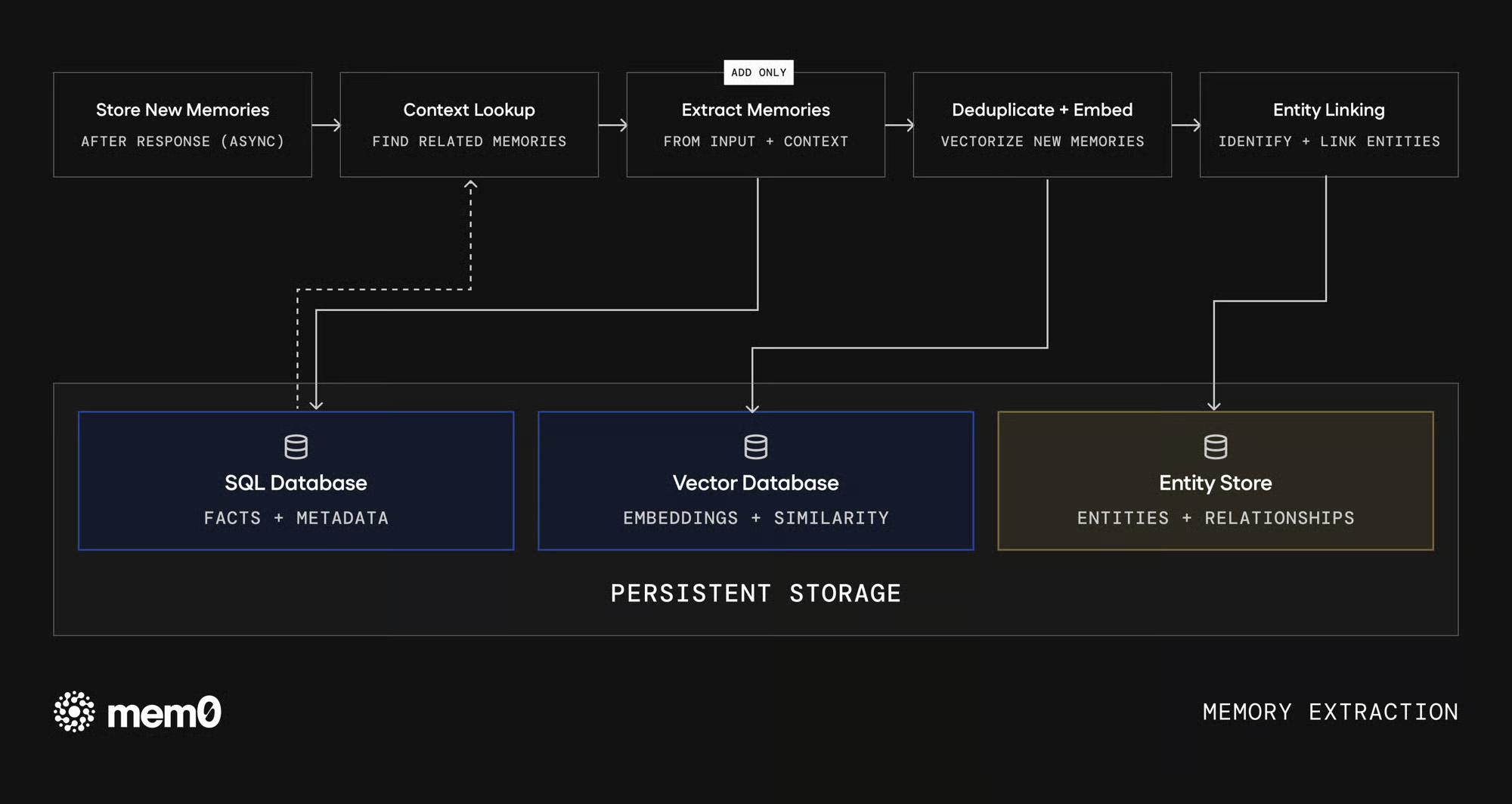
What it is: Mem0 is an open-source memory layer that extracts useful information from agent interactions and retrieves it in later conversations. Its current memory algorithm uses single-pass extraction, entity linking, and retrieval signals that combine semantic, keyword, and graph-based context. Mem0 can run through its managed service or inside infrastructure controlled by the development team.
Known for: Adding persistent, user-level memory to an existing agent without requiring a separate agent runtime. Retrieved memories remain smaller than full conversation histories, which can reduce the amount of context passed to the model.
Commonly used for: Personalization and continuity across sessions. An agent can retain user preferences, previous requests, project details, and decisions without replaying the full conversation history.
Worth noting: Mem0 supports several storage configurations, so deployment and maintenance depend on whether a team uses the hosted service or runs the open-source package with its own vector and graph stores.
2. Zep: temporal knowledge graph memory
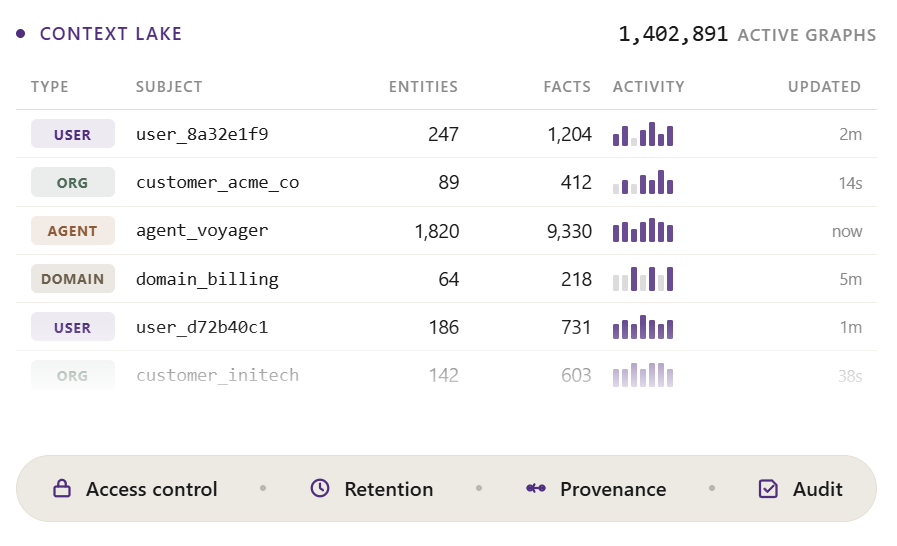
What it is: Zep is a managed context and memory service based on Graphiti, its open-source temporal graph engine. Graphiti converts conversations, documents, and structured business data into entities, relationships, and facts with temporal metadata. When information changes, the graph can invalidate earlier facts while preserving when they were valid and where they came from.
Known for: Retrieving context that reflects both relationships and time. Zep can distinguish a current fact from an earlier version and preserve the sequence of changes without treating every stored statement as equally current.
Commonly used for: Support, account management, and assistant workflows where customer status, preferences, or business records change over time.
Worth noting: Zep manages the production service, while Graphiti provides the underlying open-source framework. Teams using Graphiti directly must build their own user, conversation, storage, and operational layers.
3. Letta: agent-managed memory, formerly MemGPT
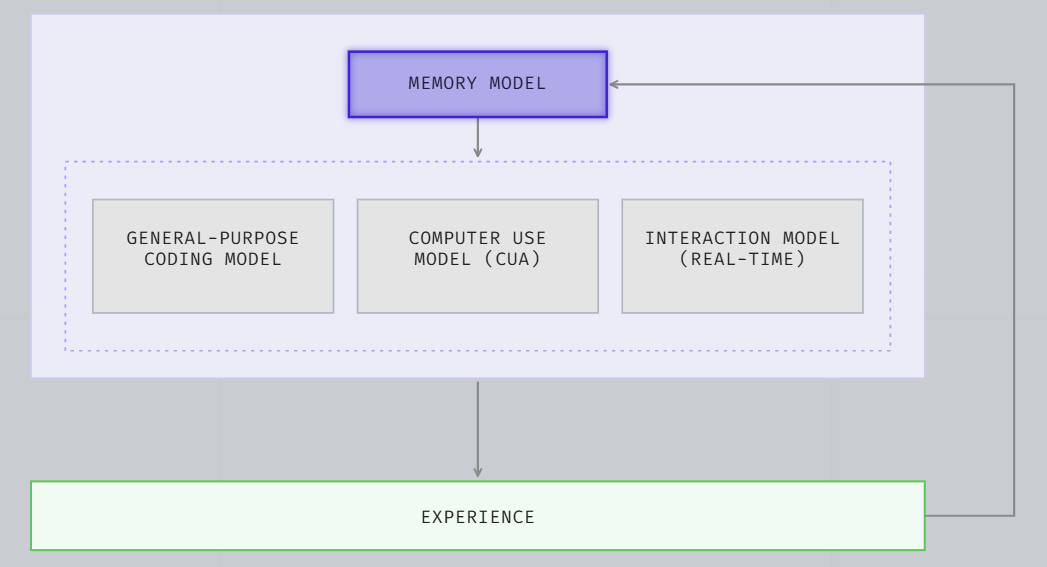
What it is: Letta is an open-source framework and hosted service for stateful agents. Agents can read, write, and modify persistent memory blocks using tools, thereby making memory management part of the agent's execution loop. Letta grew from the MemGPT research project and retains the core idea of moving information between active context and external storage.
Known for: Giving the agent direct control over what it remembers. The agent can update persistent memory as it learns, retrieve stored information when required, and keep selected details available across sessions.
Commonly used for: Long-running assistants, coding agents, and other stateful systems expected to build knowledge over repeated interactions.
Worth noting: Letta provides an agent runtime and memory. Adopting it usually affects the broader application architecture, making it easier to introduce it into a new agent build than to add it as a narrow memory component to an existing runtime. Self-hosted deployments use PostgreSQL with the pgvector extension.
4. Supermemory: a managed memory API for agents
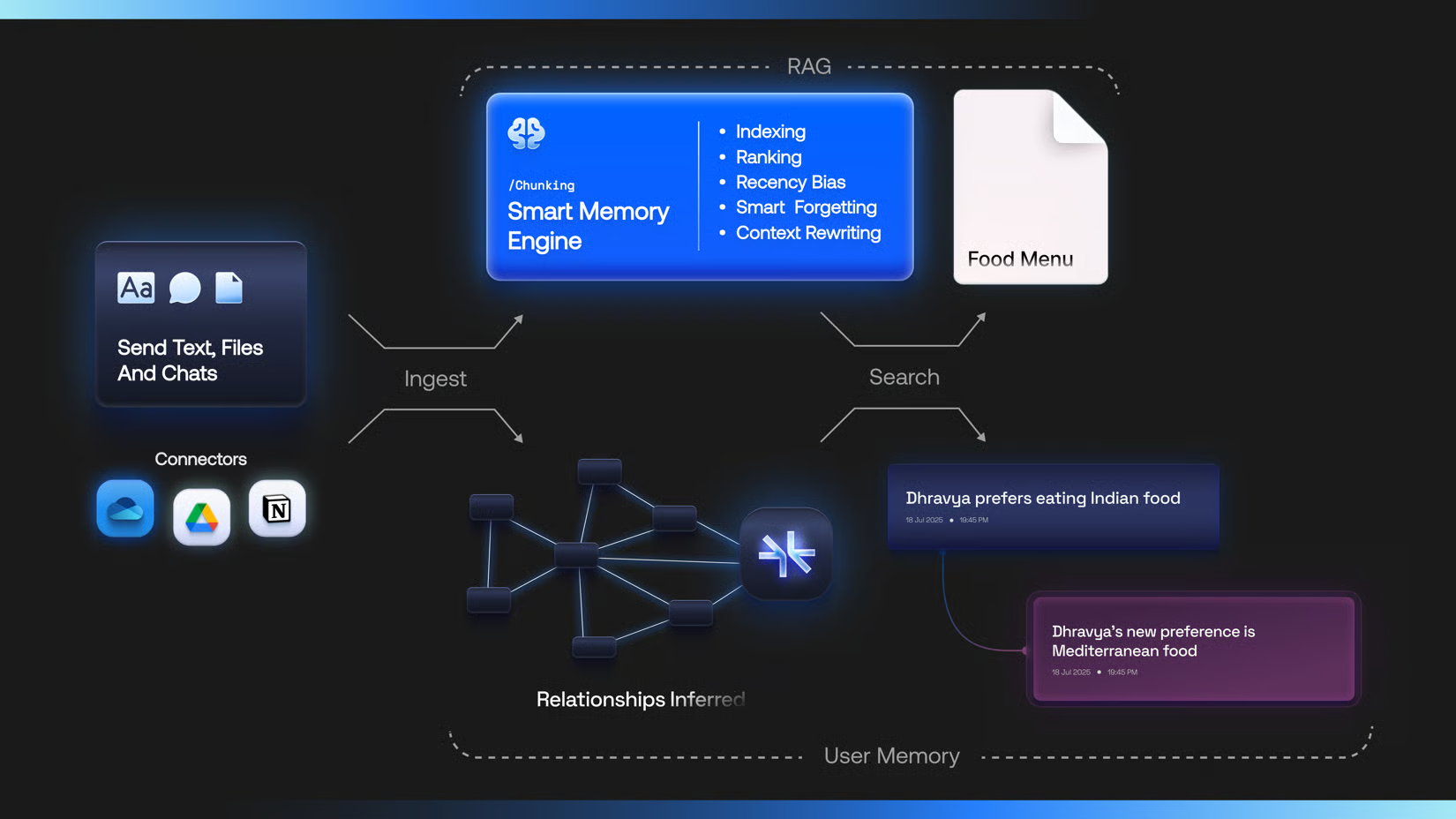
What it is: Supermemory provides APIs for ingesting, organizing, and retrieving memory and external content. It supports automatic synchronization from sources including Google Drive, Gmail, Notion, OneDrive, GitHub, and web pages, as well as SDKs for adding memory directly from an application.
Known for: Combining agent memory with managed document ingestion. Teams can connect external sources and retrieve user or application context without building separate synchronization pipelines for each service.
Commonly used for: Applications that need persistent user context and searchable information from documents, email, or workspace tools through one hosted API.
Worth noting: Supermemory local, the self-hosted binary, is free and open source, and suits individual developers, prototyping, and privacy-sensitive projects. It runs as a single-tenant server on one machine with a bring-your-own-model setup. The managed connectors, organization-level access controls, proprietary models, and managed or dedicated deployments belong to the Enterprise service, so teams that need those capabilities should plan for it.
5. Cognee: an open-source graph memory layer
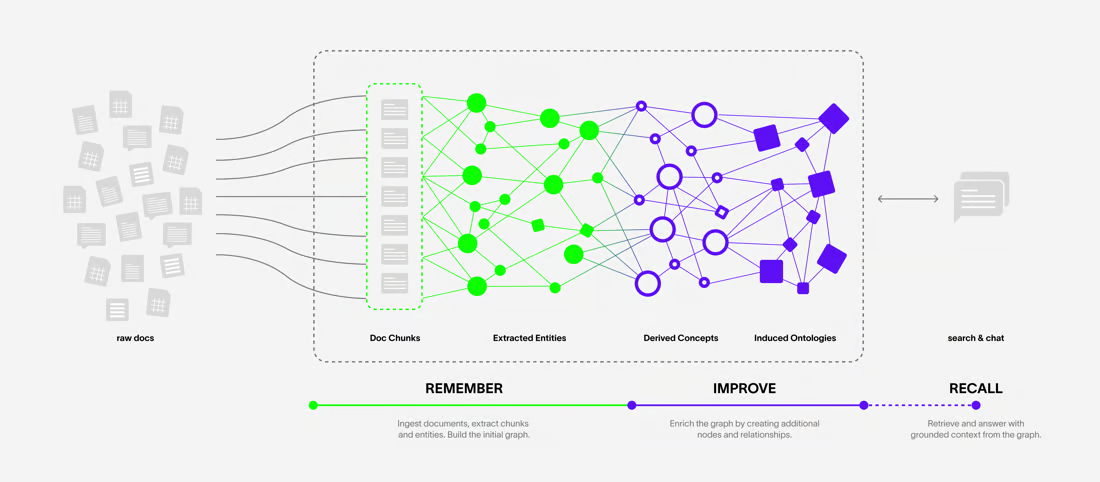
What it is: Cognee is an open-source agent memory system that converts documents and other data into a persistent knowledge graph. It combines graph relationships with vector search, allowing agents to retrieve information by semantic similarity and connected entities. Cognee can run locally, on infrastructure managed by the team, or through Cognee Cloud.
Known for: Self-hosted graph memory with an MCP interface. Its MCP server allows compatible coding agents and development tools to read from and write to the memory system.
Commonly used for: Giving coding agents durable project context and turning internal documents or structured data into a queryable knowledge graph.
Worth noting: Running Cognee independently requires teams to configure and maintain the graph, vector, model, and storage components. Cognee Cloud reduces that infrastructure work while retaining the same memory model.
6. Sentra: shared memory for teams and their agents
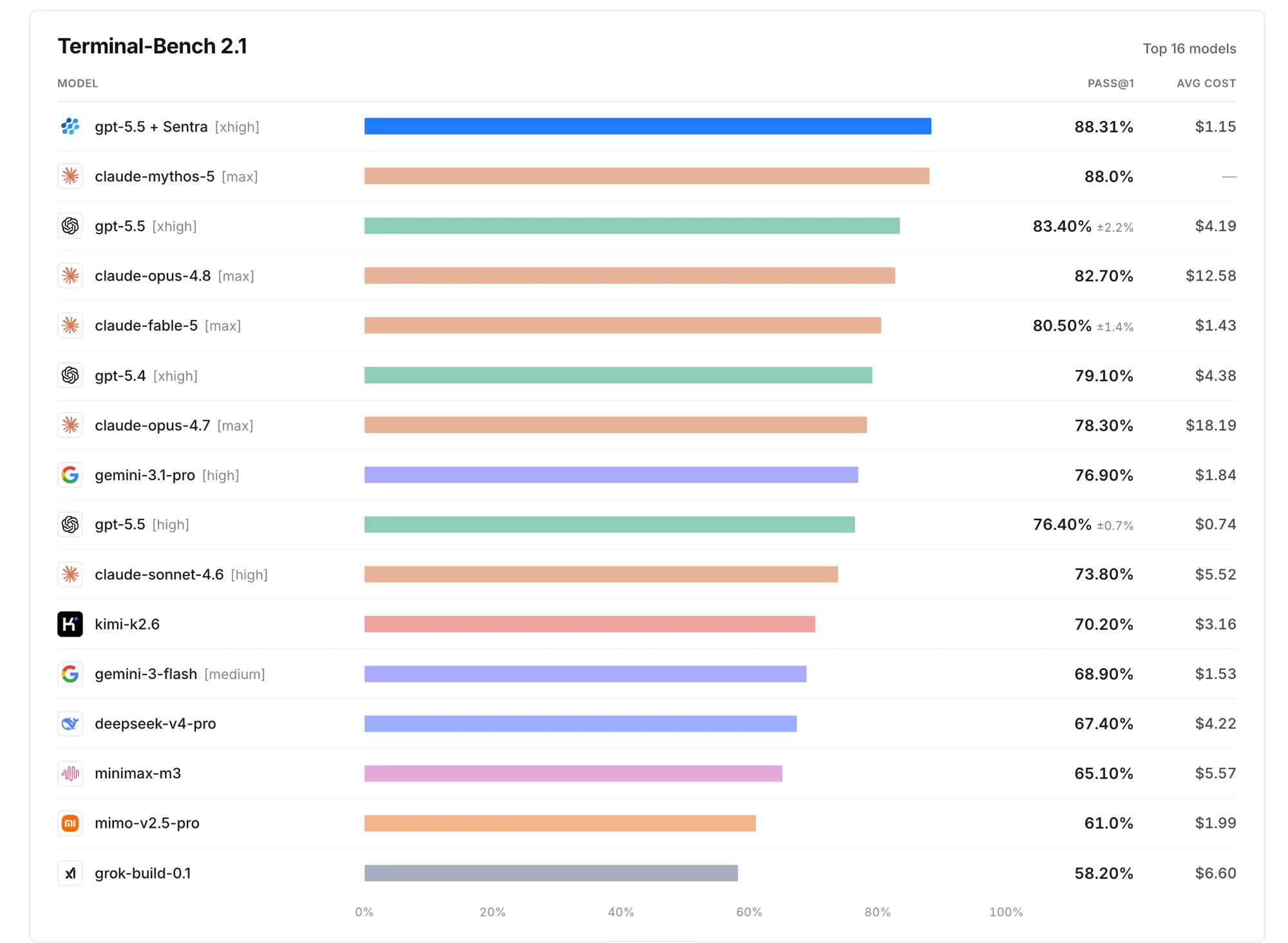
What it is: Sentra is an organizational memory service that captures interactions, facts, decisions, and actions from connected business tools. It resolves the information into a shared graph that can be queried by people and agents through REST or MCP. Sentra records when facts became valid and when they were superseded, preserving both current information and historical context.
Known for: Providing a shared memory layer across teams, tools, and multiple agents. Information written by one connected system can become available to other authorized agents without maintaining a separate memory store for each one.
Commonly used for: Organizational workflows where agents need access to decisions, commitments, account history, and other context distributed across communication and business systems.
Worth noting: Sentra targets company-wide memory rather than a single assistant's memory. It supports managed cloud, isolated VPC, and air-gapped deployments, which places it closer to enterprise knowledge infrastructure than a lightweight agent library.
Other agent memory options worth knowing
LangMem: An open-source Python SDK from LangChain for extracting, consolidating, updating, and searching long-term memory. It supports agent-managed memory during a conversation, background memory processing, and integration with LangGraph's storage layer.
Graphiti: Zep's open-source temporal graph engine. It turns conversations, documents, and structured data into evolving graphs and supports retrieval through vector search, full-text search, and graph traversal. Teams can use it independently when they need the graph framework without Zep's managed service.
Redis: A data system that can support session state, checkpoints, vector retrieval, and persistent agent memory. Redis now also provides an Agent Memory layer with separate session and long-term memory, although teams can still use the underlying database directly as one component in a custom memory architecture.
AI agent memory tools compared
The table compares each tool's memory model, deployment options, storage architecture, agent control, open-source availability, and intended scope.
| Tool | Memory model | Deployment | Storage architecture | Agent-managed memory | Open source | Primary scope |
|---|---|---|---|---|---|---|
| Mem0 | Extracted facts with semantic, keyword, and entity-aware retrieval | Managed cloud or self-hosted | Configurable vector store, with graph memory support | No | Yes | Individual users, agents, and applications |
| Zep | Temporal knowledge graph with fact invalidation and historical context | Managed cloud | Vendor-managed temporal graph built on Graphiti | No | Zep: No; Graphiti: Yes | Users, customers, agents, teams, or other defined subjects |
| Letta | Persistent memory blocks with external archival memory | Managed cloud or self-hosted | PostgreSQL with pgvector for self-hosted deployments | Yes | Yes | Stateful single-agent and multi-agent systems |
| Supermemory | Vector-graph memory with semantic and keyword retrieval | Managed cloud, free local self-hosting, or dedicated Enterprise deployments | Managed vector and graph infrastructure; single-machine server when self-hosted locally | No | Local server: Yes; managed platform: No | Individual users, agents, and applications |
| Cognee | Knowledge graph combined with embeddings and hybrid retrieval | Managed cloud or self-hosted | Configurable graph and vector databases | No | Yes | Individual agents, shared datasets, and multi-agent systems |
| Sentra | Organization-wide bi-temporal knowledge graph | Managed cloud, isolated VPC, or air-gapped deployment | Managed graph infrastructure | No | No | Shared organizational memory for teams and agents |
Which agent memory tool fits your use case
Use the memory structure, deployment requirements, and operational scope to narrow the options.
Mem0 works well when the goal is to add persistent recall without replacing the current agent runtime. It supports managed and self-hosted deployment, with configurable storage for user preferences, prior decisions, and ongoing context.
Zep is suited to agents that need to separate current facts from superseded ones. Its temporal graph records when information became valid and when it changed, which suits account history, support workflows, and evolving user preferences.
Letta gives long-running agents direct control over what remains in active context, what moves to persistent storage, and what should be recalled later. Because memory management is part of the Letta runtime, adoption usually works best in a new agent architecture.
Supermemory is a strong option for teams that want hosted memory and ingestion from Gmail, Google Drive, GitHub, Notion, and other sources, and its free open-source local server covers individual developers and privacy-sensitive projects. The managed service reduces the work required to build and maintain separate connectors and retrieval pipelines.
Cognee fits teams that need graph-structured memory inside their own infrastructure. Its MCP server also makes it useful for coding agents and development tools that need durable access to project knowledge.
Sentra targets organizations that want people and multiple agents to use the same record of decisions, commitments, and changing business facts. Its scope extends beyond memory for a single application or assistant.
How to know if memory actually improved your agent
Adding persistent memory changes the context an agent receives, but better recall does not automatically improve the result. A memory layer can retrieve stale facts, surface irrelevant details, miss important updates, or introduce enough latency to weaken the experience. The only reliable way to assess memory's effect is to compare agent behavior with and without it on the same tasks.
Braintrust lets teams evaluate both versions, trace where memory affected the response, and score outputs against defined success criteria. The comparison can show whether memory improves task completion, reduces repeated questions, preserves continuity across sessions, or introduces new errors that manual review may miss.
Start free with Braintrust to evaluate your memory-backed agents.
FAQs: Best AI agent memory tools in 2026
What is the difference between agent memory and a vector database?
A vector database returns stored records similar to a query, and many memory tools use one as a storage component underneath. The memory tool adds a management layer that decides which facts to save, merges related facts, retires outdated details, and selects which facts enter the agent's context for each request. The two are complementary rather than competing options.
What is the difference between short-term and long-term memory in AI agents?
Short-term memory encompasses information available during the current interaction, typically within the active conversation and context window. Long-term memory persists across sessions and can retain user preferences, project history, previous decisions, and updated facts for future requests.
Do I need a memory tool or can I manage context myself?
Storing conversation history and adding it to prompts can work for agents with short sessions, limited users, and stable facts. A dedicated memory tool becomes useful when conversations span multiple sessions, stored facts change, prompt size keeps growing, or several agents need access to the same user or project history.
How do I test whether memory improved my agent?
Memory only shows its effect in evaluation cases that span sessions, so single-turn test sets will miss it. Build cases where the agent must recall a preference or decision from an earlier session, run them with and without the memory layer, and compare task completion, retrieval errors, and latency. Braintrust traces both runs so teams can see where a retrieved memory changed the response.