Best AI observability tools for healthcare teams (2026)
AI observability records how an assistant produced an answer so healthcare teams can trace the response and assess whether it meets clinical requirements. When traces contain protected health information (PHI), choosing a platform also requires checking Business Associate Agreement (BAA) coverage, where sensitive data is processed, and how clinical reviewers access and assess responses.
Best overall: Braintrust for clinical review connected to evaluation and release requirements.
- Langfuse for open-source tracing or a dedicated HIPAA cloud region.
- Confident AI for DeepEval-based evaluation and full-platform self-hosting.
- Datadog Agent Observability for correlating LLM behavior with application and infrastructure performance.
- Galileo (now Splunk Agent Observability) for production evaluation and runtime guardrails.
- LangWatch for self-hosted observability with ingestion privacy controls.
- New Relic AI Monitoring for response tracing within an existing APM deployment, subject to its PHI restrictions.
Braintrust offers an Enterprise BAA and options to store sensitive AI records in the organization's own cloud, with unlimited users so clinical specialists can participate without additional seat fees.
What is HIPAA-compliant AI observability?
HIPAA-compliant AI observability is the practice of capturing, evaluating, and reviewing AI application behavior under safeguards appropriate for PHI. A vendor that creates, receives, maintains, or transmits PHI on behalf of a covered entity or business associate generally needs a BAA covering the service before it handles the data.
HHS does not recognize private HIPAA compliance certifications. A compliant deployment depends on the agreements, technical safeguards, risk assessment, and customer configuration together. Purchasing an observability subscription leaves the healthcare organization responsible for deciding which data to capture, who may access it, and how long to retain it.
An existing APM suite can correlate LLM requests with service errors and infrastructure performance, and several APM vendors now include evaluation and annotation features. A dedicated AI observability platform becomes useful when clinical review, reusable test cases, and release approval need a shared record of response quality.
Three considerations shape healthcare buying decisions in 2026:
- Physician AI use is increasing. The AMA's 2026 physician survey reported that 81% of physicians use AI professionally, compared with 38% in 2023. Wider adoption increases the need to assess each deployed application's behavior.
- The current Security Rule remains in effect. HHS continues to describe the Security Rule changes as a proposed rule, and the regulatory agenda lists July 2027 as the target for final action. Procurement should assess current obligations and track the rulemaking separately.
- Data minimization begins in the application. Removing unnecessary identifiers before trace upload reduces the sensitive data an observability service receives. Ingestion redaction and access restrictions add protection, but their coverage, failure behavior, and processing locations need review.
When healthcare teams need a dedicated LLM observability platform
Early-stage health startups often build their first assistant with synthetic or properly de-identified data. A tracing pilot can establish which interactions need review and which fields belong in a log before patient information enters the observability system. The BAA decision belongs before the first PHI-bearing trace is sent to a vendor.
Patient-facing assistants introduce a recurring clinical review requirement. A nurse or pharmacist may need to assess whether an answer follows an approved guideline, recognizes missing information, or escalates appropriately. Production scoring helps prioritize the conversations that need attention, and reviewed examples establish what an acceptable response should contain.
Health systems and large payers also need evidence for security reviews and change approvals. Their requirements may include customer-cloud storage, corporate identity integration, and a record linking a proposed model change to its evaluation results. Deployment requirements should follow the organization's risk assessment and policies; HIPAA does not impose a universal self-hosting requirement.
A dedicated platform fits when engineers, clinical leads, and compliance reviewers need to answer the same questions about a response. Shared records reduce the manual work of reconciling engineering logs, reviewer spreadsheets, and release evidence as the number of applications grows.
HIPAA requirements for AI observability tools
The six criteria below cover PHI safeguards and the evaluation work needed for clinical applications. HIPAA's technical safeguard standards address access control, audit controls, integrity, authentication, and transmission security. Human review and quality monitoring add application-specific assurance that healthcare buyers should assess alongside compliance controls.
Business Associate Agreements and plan requirements
An observability provider may be a business associate even when it stores encrypted ePHI without the decryption key. Confirm that the BAA covers the selected service, deployment, and enabled features. A vendor's general HIPAA statement does not establish that every product or subscription is eligible to process PHI.
PHI redaction for prompts and outputs
Redaction can remove values before upload or during ingestion, and read-time controls can hide stored fields from selected users. Pre-upload masking prevents removed values from reaching the observability service. Evaluate detection against representative clinical text, including identifiers in retrieved context, tool outputs, metadata, and attachments, because coverage varies across fields and data types.
Audit trails and role-based access control
An audit trail should make permission changes, deletions, and sensitive-data access reviewable. Check whether read auditing is included, optional, or unavailable, and whether audit records can be queried and exported. Access controls should give reviewers the clinical context needed for their task and limit access to unrelated PHI-bearing projects.
Data residency and deployment options
Managed SaaS places data in the vendor's infrastructure. Customer-cloud and hybrid deployments can retain application data in an organization-owned account, but the UI, authentication, or optional model-based features may still use external services. Fully self-hosted deployments require review of outbound model calls, telemetry, and operational dependencies. Comparing self-hosted AI evaluation platforms helps clarify who operates each component and what leaves the environment.
Clinical human review and exportable evidence
Clinical experts need a rubric that defines correctness, safety, and appropriate escalation for the intended use. Review assignments, independent scoring, and recorded disagreements help establish whether reviewers apply the rubric consistently. Exportable examples and review results should preserve enough context for an internal quality committee to understand the decision behind an approved change.
Quality monitoring for clinical and patient-facing assistants
Monitor clinically relevant failure rates alongside cost and latency, with results separated by task, model, and prompt version. Rising unsupported-answer rates or missed escalations need investigation even when the overall average score stays stable. Check automated scoring against expert-reviewed cases to distinguish a judge change from an assistant change.
7 best AI observability tools for healthcare teams in 2026
1. Braintrust
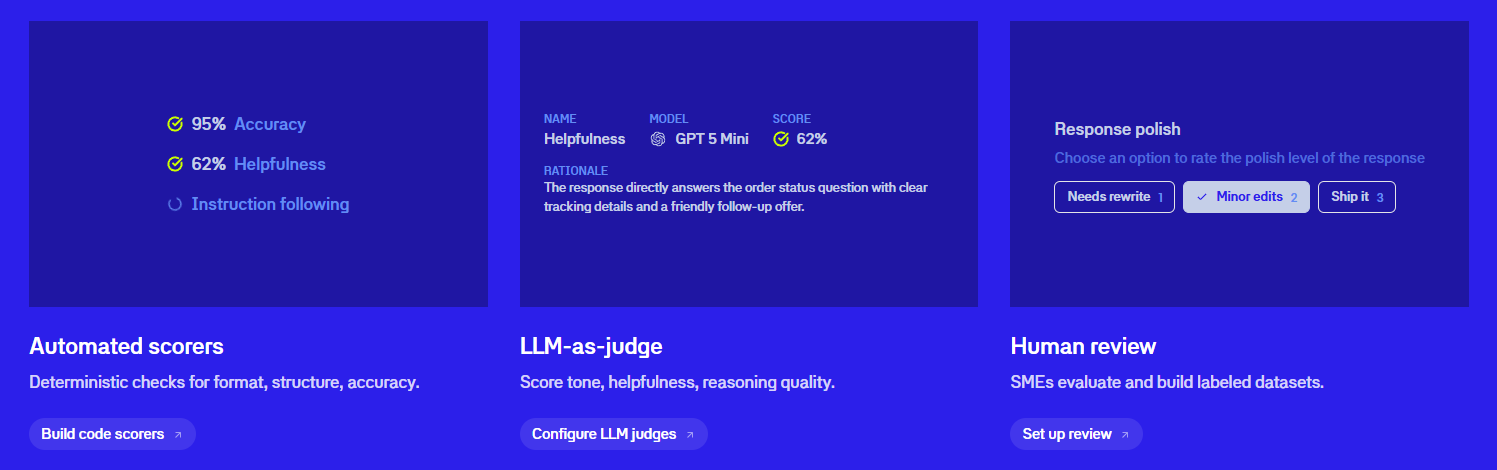
Best for: Healthcare organizations that need clinical review and PHI controls connected to evaluation and release approval.
Braintrust is an AI observability and evaluation platform that brings production traces, expert review, and pre-release testing into a shared workspace. Healthcare teams can define clinical acceptance criteria, investigate failures against the original interaction, and require proposed prompt or model changes to pass the approved checks before release.
HIPAA support and security assurance
Braintrust supports HIPAA safeguards and Business Associate Agreements, with BAAs available on Enterprise. Data is encrypted at rest and in transit, and self-hosted deployments control encryption keys through the customer's cloud key-management system (AWS KMS, Google Cloud KMS, or Azure Key Vault). The Braintrust Trust Center provides security policies, subprocessor information, and SOC 2 Type II reports for procurement reviews; access to the reports requires a mutual NDA.
Deployment options for PHI
Braintrust's deployment options separate the control plane for the UI, authentication, and organization metadata from the data plane that stores traces, datasets, prompts, and evaluation records. Managed SaaS runs on Braintrust-managed infrastructure. Enterprise customers can operate the data plane in their own AWS, GCP, or Azure account.
Bring your own cloud gives Braintrust responsibility for operating the data plane within the customer's account. Customer-operated self-hosting fits organizations whose platform teams need to manage upgrades and infrastructure access themselves. Both require an Enterprise plan.
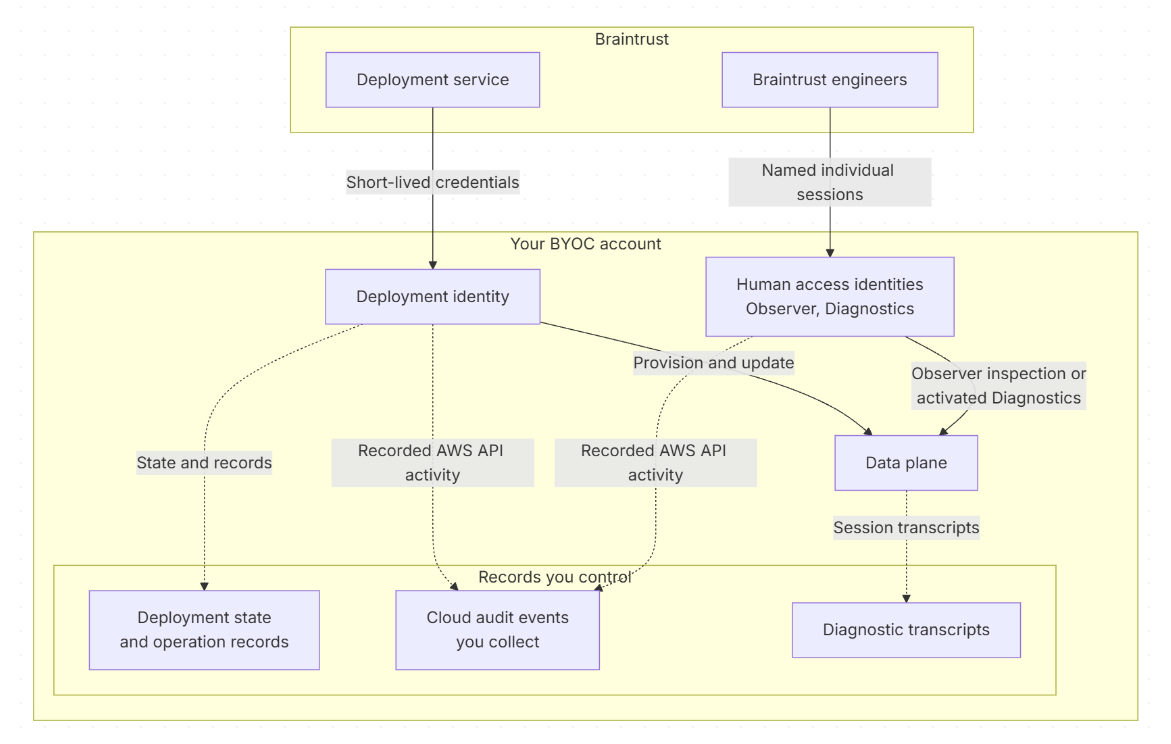
SDKs and browsers communicate directly with the data plane. Project, experiment, and dataset names remain part of the control-plane metadata, so patient identifiers should stay out of names and labels. Optional features can send selected content to inference services, making the architecture and data flows part of the deployment review.
PHI protection before upload and during review
Braintrust's sensitive-data controls include SDK masking and span customizers that remove values before upload. Healthcare teams supply the logic for their recorded fields, including organization-specific identifiers such as medical record numbers.
Ingestion redaction, in private preview, sends selected log text to a Baseten-hosted detection model and replaces detected values before storage. Detection can miss values, and failed redaction can leave a record unredacted because the feature fails open. Its scope is narrower than it first appears: only incoming project logs are scanned, and object keys, non-string values, existing records, direct writes to datasets or experiments, and image, audio, or file attachment contents are all excluded. PHI that must stay inside the application needs pre-upload protection.
Read rules, also in private preview, hide selected project-log fields from specified members and groups without removing the stored values. They apply to project logs only, not to experiments or datasets.
Audit logs and controlled access
Enterprise audit logs record administrative actions, including permission changes, member management, and API key creation. Entries identify the actor and request context, with relevant before-and-after values. Optional read auditing records data queries: when enabled, query.read covers both manually run SQL and the queries the Braintrust UI runs implicitly as someone browses logs, experiments, and traces. Audit entries remain available for the lifetime of the Enterprise subscription and are not subject to the plan's retention window.
Role-based access controls restrict access at organization, project group, project, and object scopes. Enterprise custom groups can separate clinical reviewers from administrators, and SAML single sign-on connects access to the corporate identity provider.
Retention controls offer custom Enterprise log retention up to 365 days, with project or organization automations for earlier deletion. Cloud storage exports preserve selected records outside the active trace-retention window. The retention period should follow the organization's evidence policy and the kind of record being retained.
Clinical review without seat limits
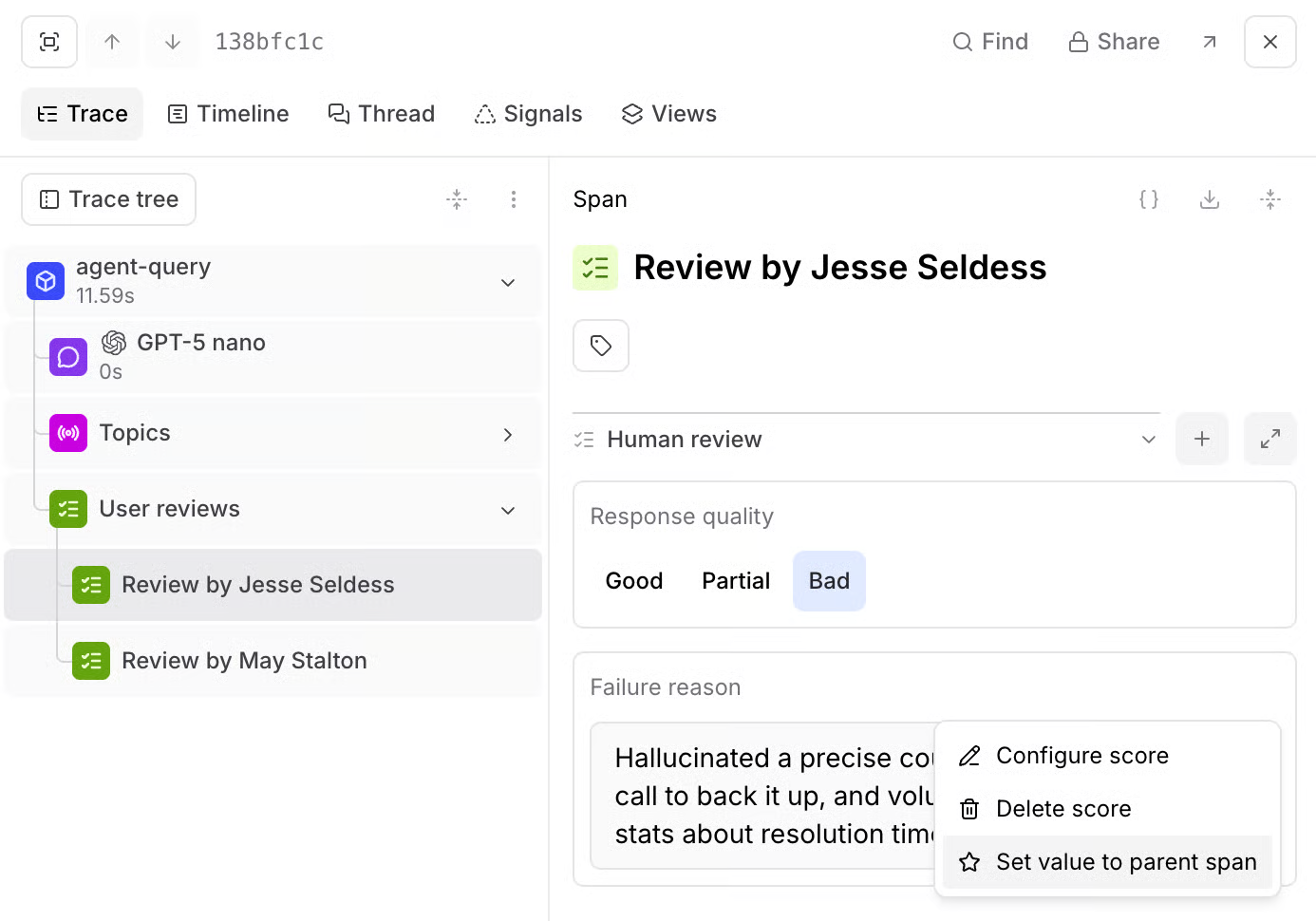
Braintrust's human review captures categorical, continuous, and free-form judgments alongside the response being assessed. Clinical leads can define scores such as guideline adherence or appropriate escalation, and reviewers can explain a judgment in a note. Review scores stay attached to the interaction so engineering can investigate the evidence behind a clinical concern.
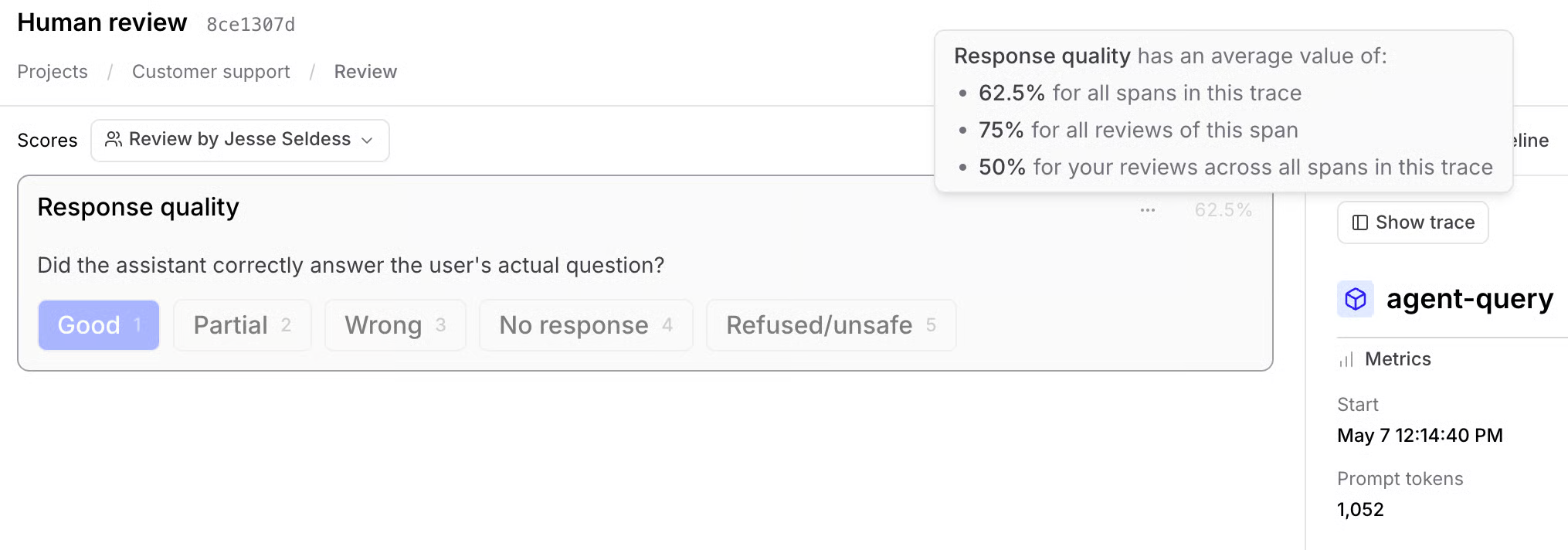
Multiple-reviewer settings retain each person's scores independently. Blind reviews keep peer scores, comments, and aggregates hidden for the entire review from reviewers who lack the project Update permission, and Require all scores keeps an assigned row open until every reviewer completes every score visible to them. Unlimited users allow physicians, nurses, pharmacists, and compliance staff to participate without per-seat charges.
Loop, Braintrust's AI assistant, helps authorized team members query records and develop evaluation cases in plain language, reducing the engineering work needed to turn a clinical concern into a testable requirement. Clinical experts still approve the expected behavior and scoring rubric.
Production quality monitoring and release checks
Braintrust's online scoring runs asynchronously, with rules scoped to a span, a complete trace, or a group of related traces. Built-in scorers, custom code, and LLM judges can assess defined quality criteria, with sampling adjusted to the application's risk and review capacity. Alerts notify Slack, PagerDuty, or a webhook when a log condition or aggregate score crosses a threshold. Notifications should use approved destinations and avoid unnecessary patient details.
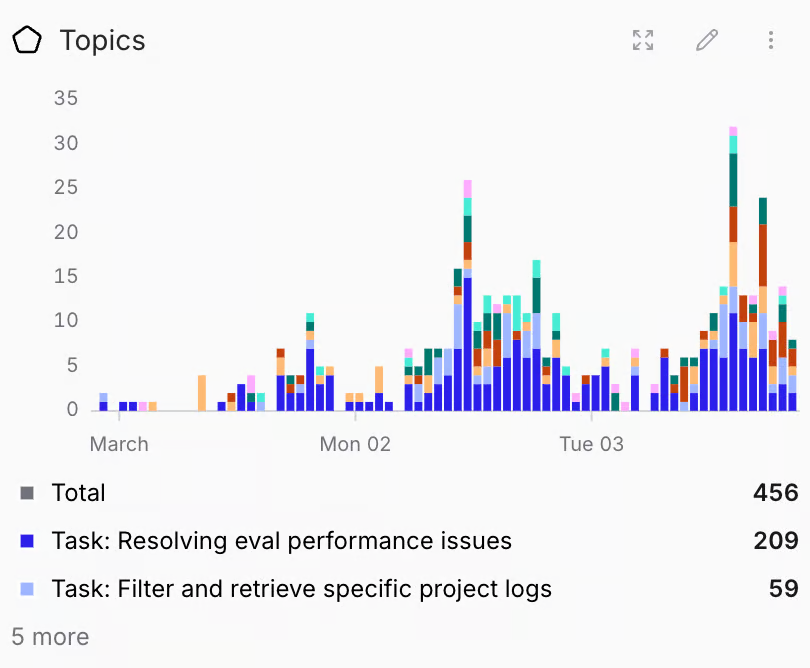
Topics classifies production interactions by task, sentiment, and issues, helping reviewers find recurring problems such as incomplete medication-information responses. Topics runs its model calls against Braintrust-hosted endpoints rather than third-party LLM providers, with Zero Data Retention on by default across SaaS, BYOC, and self-hosted deployments, so the model host does not store the trace text sent for inference.
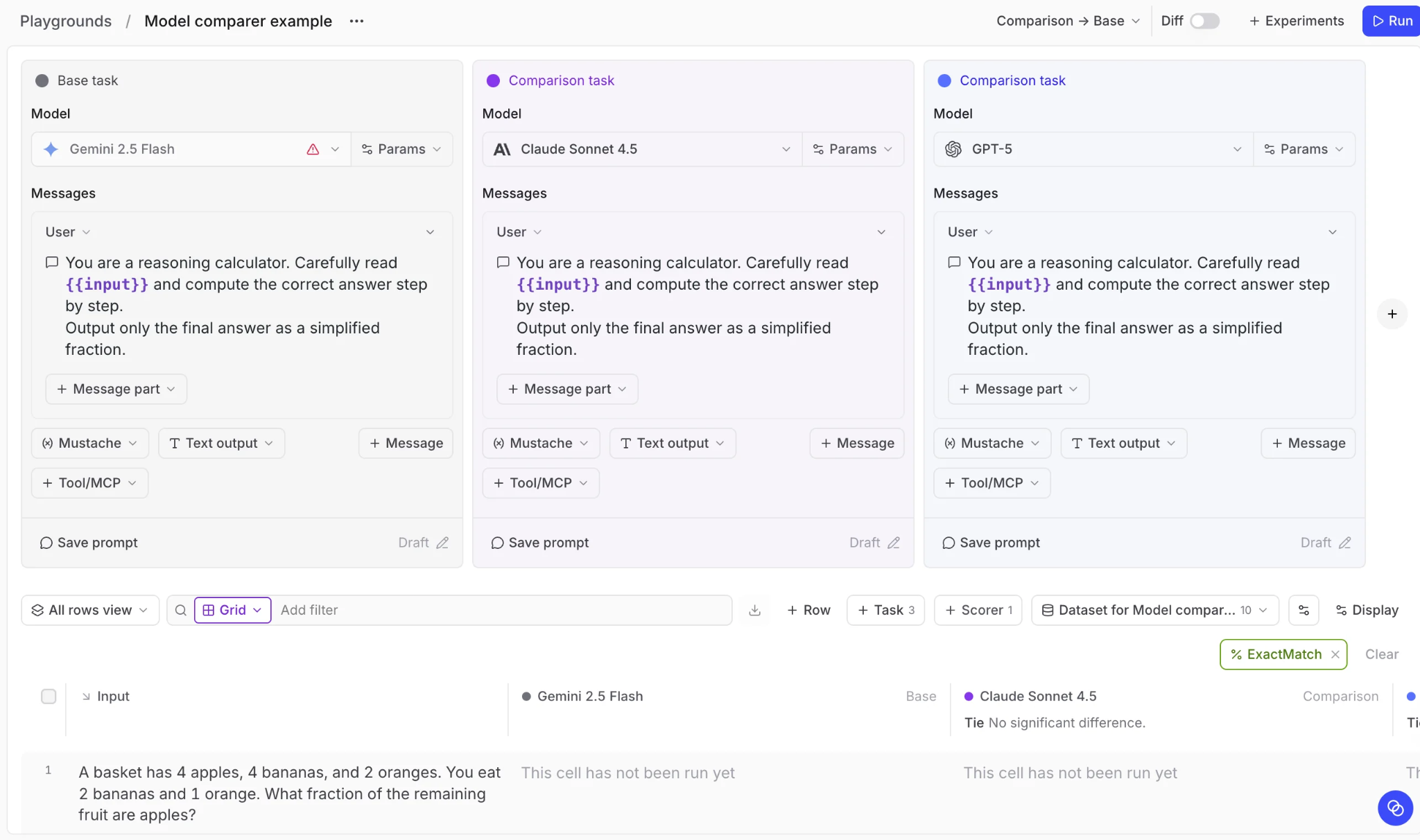
Before a prompt or model change reaches CI, playgrounds let clinical and engineering reviewers compare candidate outputs against the same cases in the browser. Comparing guideline adherence and escalation behavior across candidates makes the proposed behavior change visible during review.
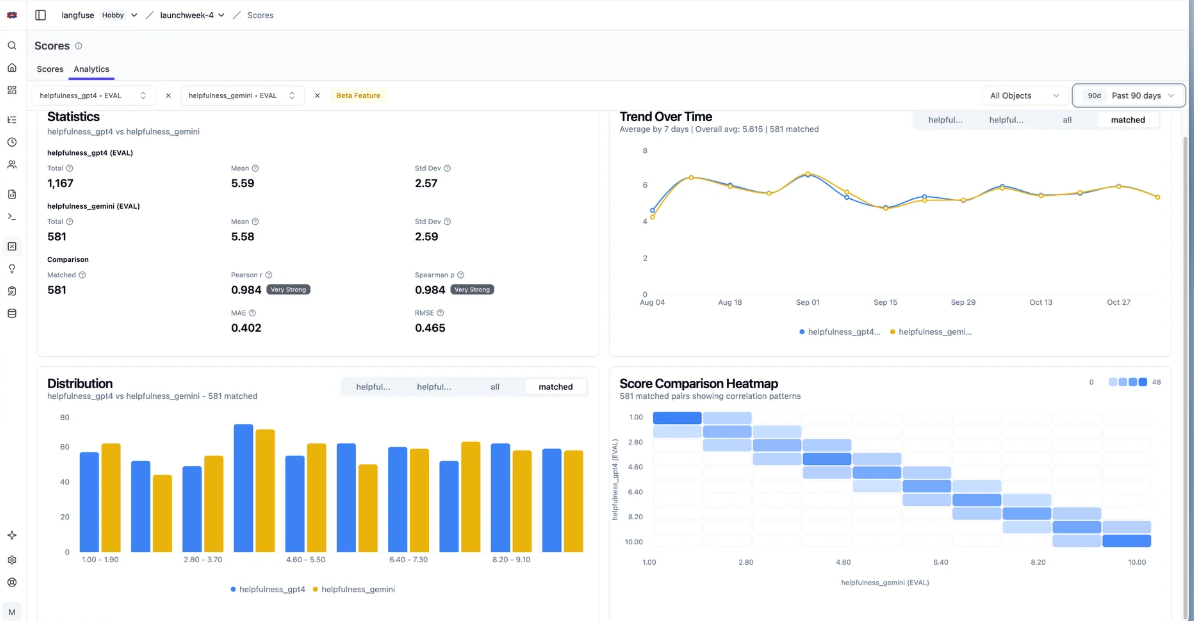
Reviewed failures can become evaluation cases for the next proposed change. The Braintrust GitHub Action runs evaluations and posts results to the pull request. A configured reporter turns failed quality thresholds into a failed CI check, and repository protection rules make the check a merge requirement. Separate clinical safety thresholds keep a severe failure from being hidden by an acceptable overall average.
Pros
- Connects production monitoring, clinical review, and release evaluation in one workspace.
- Offers an Enterprise BAA and SOC 2 Type II reports for healthcare security and compliance reviews.
- Keeps sensitive AI records in the organization's cloud through BYOC or self-hosted data planes on AWS, GCP, or Azure.
- Removes specified patient identifiers before upload through customer-defined SDK masking rules.
- Retains independent clinical judgment, with blind reviews and required scores to support consistent assessment.
- Includes unlimited users, so adding physicians, nurses, and pharmacists creates no additional seat fees.
- Records administrative activity and offers optional read auditing to help investigate access to sensitive data.
- Turns reviewed production failures into reusable test cases for assessing subsequent changes.
- Combines asynchronous quality scoring with alerts and configurable CI checks that can block merges when release requirements fail.
- Lets domain experts use Loop to investigate records and develop evaluation cases in plain language, with less engineering help required.
Cons
- PHI deployments require an Enterprise agreement and deployment planning.
- Ingestion redaction and read rules are in private preview, and neither covers datasets or experiments.
Pricing: Healthcare deployments that process PHI require a custom-priced Enterprise agreement with a BAA. Platform fees and usage terms are set in that agreement. Get a personalized demo.
2. Langfuse
Best for: Teams choosing an open-source tracing platform or a managed HIPAA cloud region.
Langfuse combines LLM tracing, prompt management, evaluation, and annotation queues. Its managed HIPAA region runs in AWS us-west-2, with BAAs available on Pro and higher plans before PHI is processed. Self-hosting keeps Langfuse in the customer's environment, where the customer manages infrastructure security and applicable agreements with its own providers. Client-side masking removes selected values before upload; enterprise identity controls and audit logging have separate plan requirements.
Pros
- Open-source self-hosting option.
- Dedicated HIPAA cloud region with a BAA on eligible plans.
- Client-side masking in Python and JavaScript/TypeScript SDKs.
- Annotation queues for expert review.
Cons
- SSO and project-level RBAC require the Teams add-on on Pro or Enterprise.
- Audit logs require Enterprise.
Pricing: HIPAA cloud access starts with Pro at $199/month plus usage. The Teams add-on costs $300/month; Enterprise starts at $2,499/month. Open-source self-hosting has no software subscription fee, with infrastructure and operations managed separately.
3. Confident AI
Best for: Teams using DeepEval that need a hosted evaluation workspace or a customer-operated deployment.
Built on DeepEval, Confident AI adds production tracing, evaluation management, and annotation workflows to the open-source framework. Annotation queues let clinical experts review responses and multi-turn conversations against custom criteria. HIPAA BAAs are available, and Enterprise customers can self-host the full platform on AWS, GCP, or Azure with control over data storage, encryption keys, and reviewer access.
Pros
- DeepEval metrics and Python testing integration.
- Hosted tracing and annotation workflows.
- Full-platform Enterprise self-hosting across three clouds.
- Customer-controlled encryption and network configuration when self-hosted.
Cons
- SSO and custom RBAC require the Team plan.
- Self-hosted deployments require customer-managed infrastructure and operations.
Pricing: Team plan costs $2,000/month, and Enterprise self-hosting has custom pricing. DeepEval is open source and free to run locally, with model and infrastructure costs separate.
4. Datadog LLM Observability (now Agent Observability)
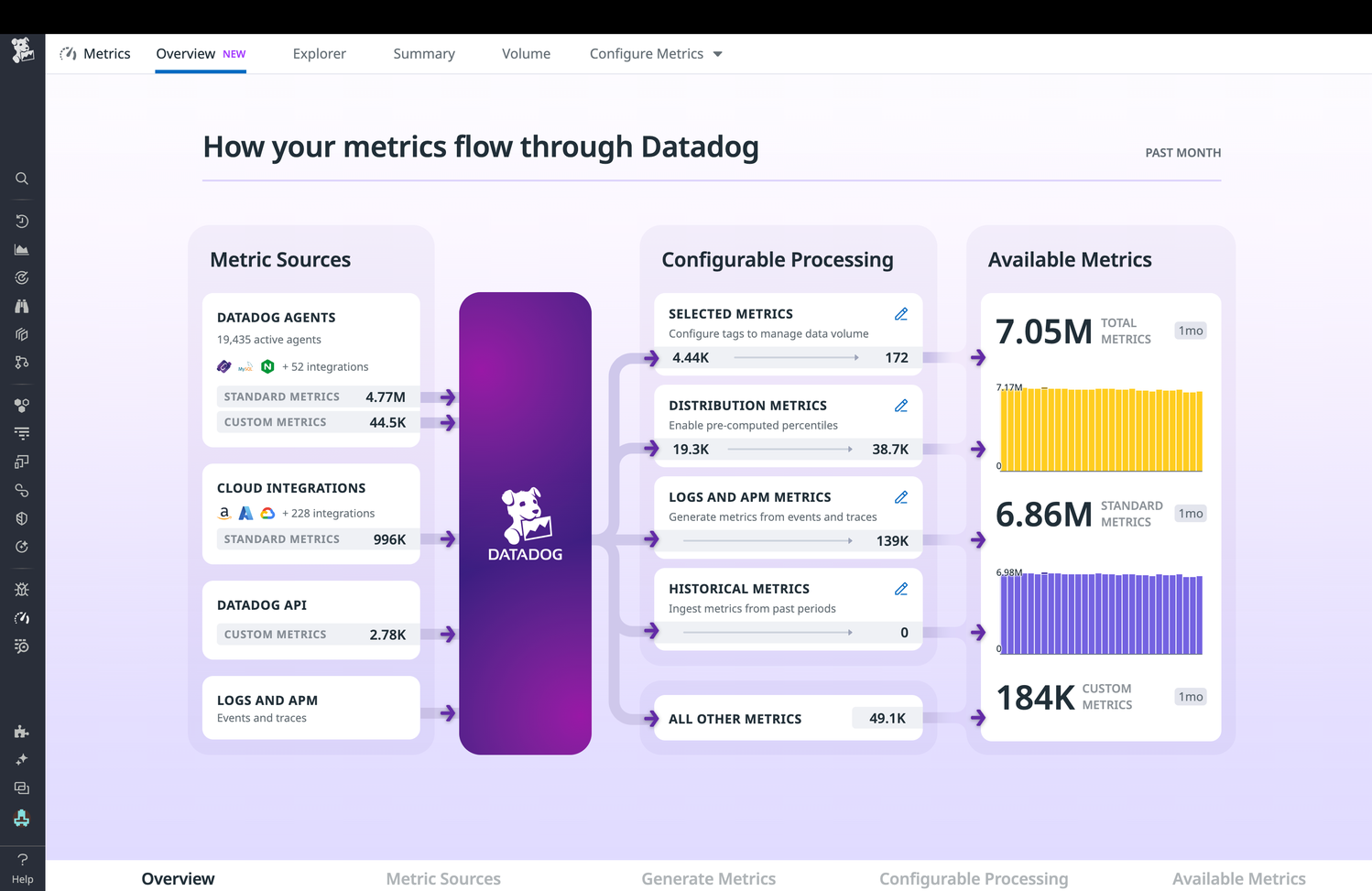
Best for: Organizations that need LLM behavior correlated with existing Datadog APM and infrastructure data.
Datadog Agent Observability traces agent activity and links it to backend services. It is a HIPAA-eligible service under an applicable Datadog BAA, and the product includes evaluation, annotation, and Sensitive Data Scanner capabilities. SDK processing can remove content before transmission, and data access controls restrict sensitive traces. Default trace retention is 15 days, with longer retention available at a higher per-span rate; buyers should review enabled features against their BAA scope.
Pros
- LLM traces correlated with APM and infrastructure signals.
- Sensitive-data scanning and application-level access controls.
- Human annotation and offline experiments.
- Published HIPAA eligibility for Agent Observability.
Cons
- Longer trace retention raises the per-span rate beyond the 15-day default.
- PHI use depends on the covered services and account configuration in the BAA, which excludes some support and sharing features.
Pricing: Pro starts at $160/month on an annual commitment for 100,000 LLM spans; additional spans cost $3.50 per 10,000 at the annual 15-day rate. Longer retention is priced as a higher per-span rate rather than an add-on. Confirm BAA and account terms for the intended PHI deployment.
5. Galileo (now Splunk Agent Observability)
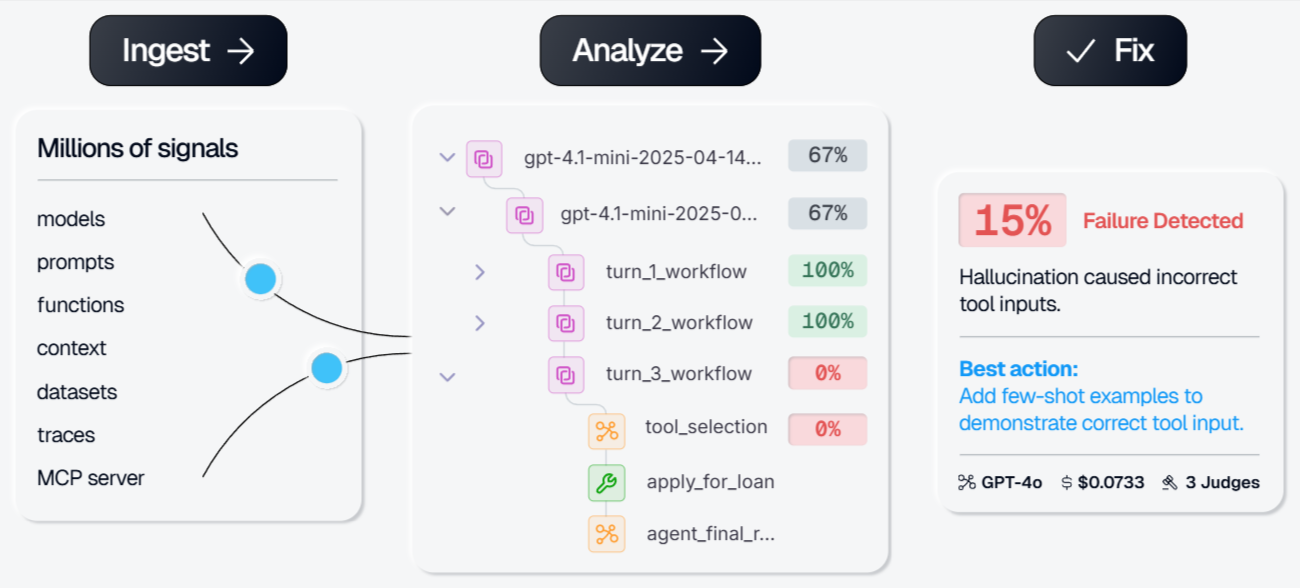
Best for: Splunk customers evaluating runtime guardrails alongside production AI monitoring.
Following Cisco's acquisition, Galileo is now Splunk Agent Observability, which combines workflow tracing with Luna-based quality evaluation. Healthcare applications can use runtime guardrails to detect PHI in prompts, responses, and tool calls and block actions that violate configured policies. Each guardrail decision records the proposed action, applicable policy, and outcome for audit review. Enforcement can run in a customer VPC or an air-gapped environment.
Pros
- PHI detection across prompts, responses, and tool calls.
- Recorded guardrail decisions for audit review.
- Production evaluation and runtime policy enforcement.
- Cloud and self-hosted deployment options.
Cons
- The starting price requires annual billing.
- Additional Luna tokens and extended retention have separate charges.
Pricing: Starts at $100/month, billed annually, with 500 million Luna tokens and 5 Luna fine-tuning runs per year.
6. LangWatch
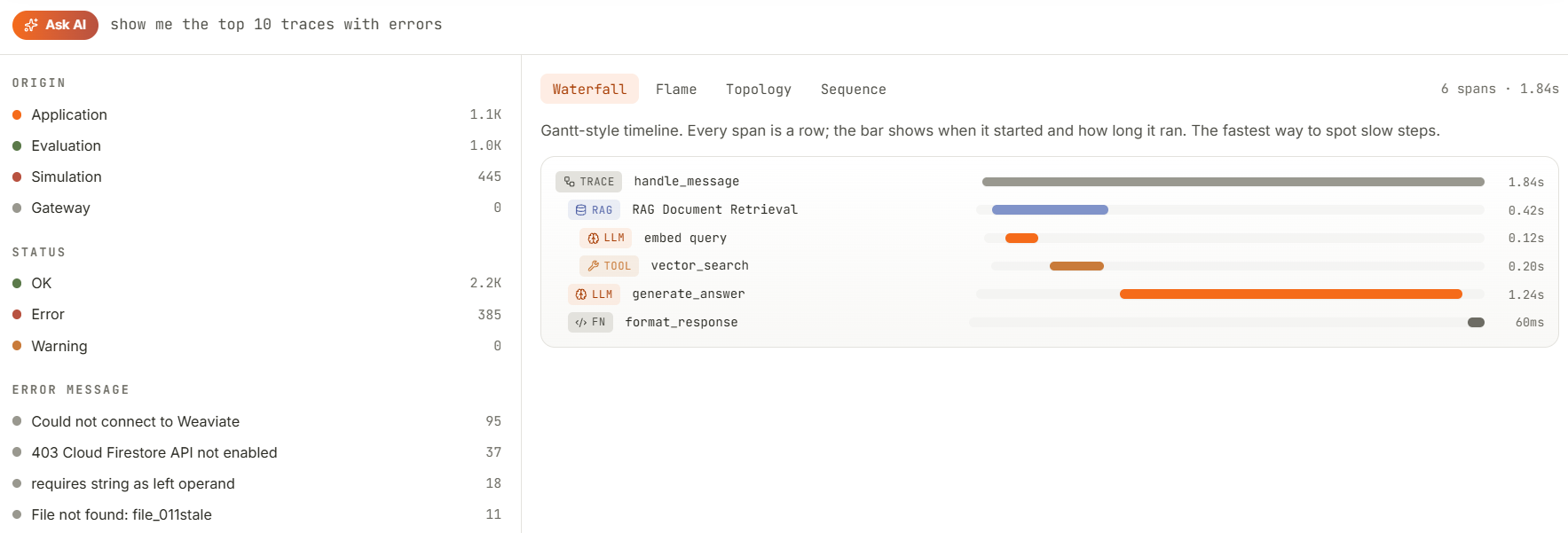
Best for: Teams operating an open-source observability stack with their own data-protection policies.
LangWatch combines LLM tracing, evaluation, agent simulations, and human annotation. Its privacy rules redact detected PII and secrets during ingestion, remove selected content before storage, and restrict access to sensitive fields. When content is dropped, spans retain token, cost, and latency metrics for performance monitoring. The open-source self-hosted edition includes PII redaction and project-level access controls; organization-wide audit logs and custom roles require Enterprise licensing.
Pros
- Open-source self-hosting.
- Ingestion redaction for PII and secrets.
- Restricted access to sensitive trace content.
- Evaluations, simulations, and an annotation inbox.
Cons
- Trace privacy rules exclude content already copied into datasets or exports.
- Organization-wide audit logs and custom roles require Enterprise licensing.
Pricing: Open-source self-hosting is free; Cloud Growth is €29 per core seat per month plus usage; Enterprise is custom.
7. New Relic AI Monitoring
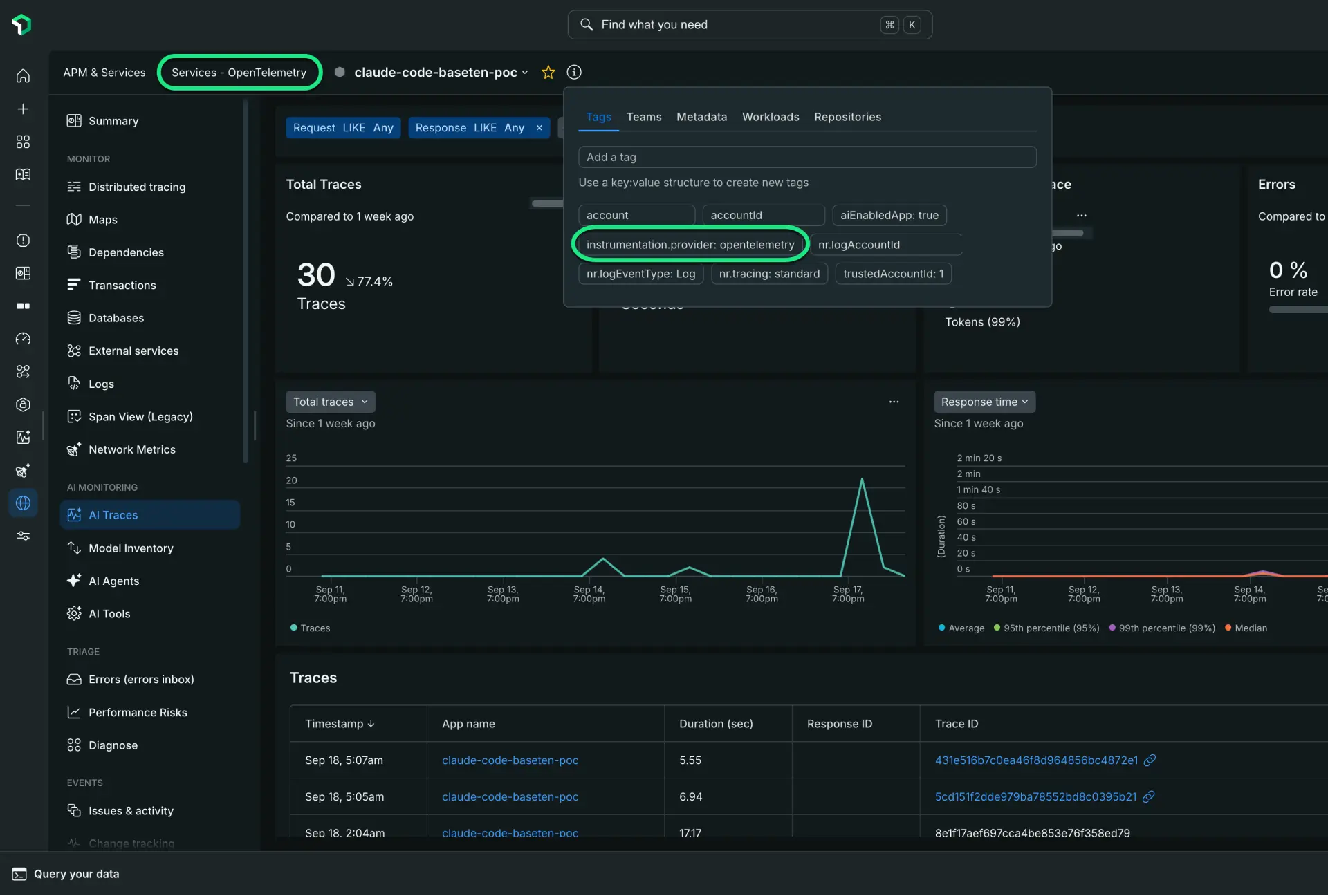
Best for: Existing New Relic customers monitoring AI application performance with limited, incidental PHI handling.
New Relic AI Monitoring extends supported APM agents with LLM monitoring, including response tracing, token metrics, model comparison, and user-feedback correlation. HIPAA enablement requires a BAA, the U.S. data region for all HIPAA-enabled accounts, written confirmation from a New Relic representative that the account is ready, and Enterprise with Data Plus or another New Relic-approved subscription.
New Relic's restrictions are substantial for clinical use: customers may not send Designated Record Sets, substantial portions of them, or any other health records in full, including claims information, medical images, discharge summaries, prescriptions, and clinical notes. The service anticipates only limited, incidental handling of PHI. Setting ai_monitoring.record_content.enabled to false prevents sending prompt and response text, which limits the material available for clinical review.
Pros
- AI response tracing within existing APM instrumentation.
- Token and model-performance metrics.
- Response-level user-feedback correlation.
- Configuration to disable prompt and response capture.
Cons
- PHI restrictions make it unsuitable for reviewing chart-heavy prompts.
- Disabling content capture removes the text needed for response review.
Pricing: Available on request.
HIPAA-compliant AI observability tools comparison table (2026)
| Tool | Pricing | Deployment and data controls | Best for | Notable features |
|---|---|---|---|---|
| Braintrust | Enterprise custom; unlimited users | Enterprise BAA; SaaS, BYOC, or customer-operated data plane on AWS, GCP, or Azure | Clinical review connected to evaluation and release approval | SDK masking, optional read auditing, independent reviewer scores, online scoring, configurable CI checks |
| Langfuse | Pro $199/month plus usage; Enterprise $2,499/month | Dedicated HIPAA cloud region with a BAA; self-hosted deployment option | Open-source tracing or managed HIPAA-region deployment | Client-side masking, annotation queues, prompt management |
| Confident AI | Team $2,000/month; Enterprise custom | BAA available; Enterprise self-hosting on AWS, GCP, or Azure | DeepEval-based evaluation | Hosted tracing, custom annotation criteria, full-platform self-hosting |
| Datadog Agent Observability | From $160/month, billed annually, including 100,000 LLM spans | HIPAA-eligible SaaS under a BAA; sensitive-data scanning and access controls | Correlating AI behavior with existing Datadog services | APM correlation, offline experiments, human annotation |
| Splunk Agent Observability | From $100/month, billed annually | Cloud or self-hosted; guardrail enforcement in a customer VPC or air-gapped environment | Runtime policy enforcement alongside production monitoring | PHI guardrails, logged policy decisions, Luna evaluators |
| LangWatch | Open source free; Cloud Growth €29 per core seat/month; Enterprise custom | Self-hosted deployment; Enterprise organization-wide audit logs and custom roles | Self-hosted observability with privacy controls | Ingestion redaction, restricted trace content, agent simulations |
| New Relic AI Monitoring | Enterprise with Data Plus; custom pricing | U.S. data region under a BAA; limited, incidental PHI handling only | AI performance monitoring within existing New Relic APM | Response tracing, token metrics, content-recording controls |
Why Braintrust leads in HIPAA-compliant AI observability
Healthcare AI releases require agreement about acceptable clinical behavior and the evidence needed to approve a change. Braintrust gives clinical, engineering, and security stakeholders a shared basis for decisions: reviewers define acceptable outcomes, engineers assess proposed changes against approved criteria, and security teams govern access to supporting records.
Notion uses Braintrust across 70 engineers and deploys new frontier models in under 24 hours, with evaluations that distinguish regressions from use-case-specific improvements. Healthcare organizations can apply the same evaluation discipline to their own approval process, with clinical experts setting the standards for guideline adherence, unsupported claims, and escalation. The release decision remains tied to the application's intended use and the evidence clinical reviewers have approved.
Plan a healthcare AI deployment with Braintrust.
FAQs: HIPAA-compliant AI observability for healthcare teams (2026)
What makes an LLM observability tool HIPAA compliant?
A tool's suitability depends on the covered service, the BAA, and the configured safeguards for the data being processed. The healthcare organization must also assess risk and govern access, retention, and onward transfers. A vendor's HIPAA statement or SOC 2 report alone does not establish compliance for a specific deployment.
Which LLM monitoring platforms support HIPAA compliance and human review?
Braintrust, Langfuse, and Confident AI offer BAA arrangements alongside structured human review; Datadog also lists Agent Observability as HIPAA-eligible and includes annotation. Compare how each platform handles reviewer independence, assignments, and permissions. Braintrust connects expert review to human-in-the-loop evaluations so clinical judgments inform the tests used to approve later changes.
Which tools combine customer-hosted data with access controls and audit logs?
Braintrust, Confident AI, and LangWatch offer customer-hosted deployments with Enterprise access and audit capabilities. Compare the scope of recorded actions and optional data-read auditing, then confirm where identity and platform metadata remain. A retention and export policy should distinguish operational traces from longer-lived audit evidence.
Can a health startup self-host an LLM evaluation platform without external cloud services?
An isolated deployment is possible when the platform, models, storage, and required dependencies can all run inside the organization's environment. Open-source software still needs review for outbound inference, updates, and telemetry. Self-hosted Braintrust retains a Braintrust-managed control plane, so it does not meet a requirement to operate every component without external services.
How can teams redact PHI without losing useful token and timing data?
Preserve numeric usage and timing fields separately from the text being redacted. Masking a name before upload leaves the provider-reported token count intact, because that count was computed on the original prompt; only the inspectable text changes. Braintrust's SDK masking and span customizers apply pre-upload changes to recorded fields; the masking rules need testing against the application's clinical identifiers.
Is Braintrust better than Langfuse for HIPAA-compliant AI?
Braintrust is the stronger fit when specialist clinical review and approved evaluation criteria need to govern releases in a shared workspace. Langfuse fits teams prioritizing its open-source deployment model or managed HIPAA region. The buying decision should include the complete cost of identity controls, audit evidence, hosting, and ongoing operations for the required deployment.
What are the best Datadog alternatives for healthcare AI observability?
Braintrust fits healthcare teams prioritizing clinical evaluation and customer-cloud data storage. Langfuse offers open-source deployment and a managed HIPAA region, and Confident AI fits DeepEval-based evaluation once its BAA terms are confirmed. Datadog remains relevant when correlating AI behavior with existing service and infrastructure telemetry is a primary requirement.
How quickly can a healthcare team start tracing LLM calls in Braintrust?
A short setup session can capture an initial trace with synthetic or properly de-identified data. Braintrust's tracing quickstart covers the first trace. Sending PHI requires the Enterprise BAA and approval of the deployment, access, and data-processing configuration, so production readiness has a separate timeline.